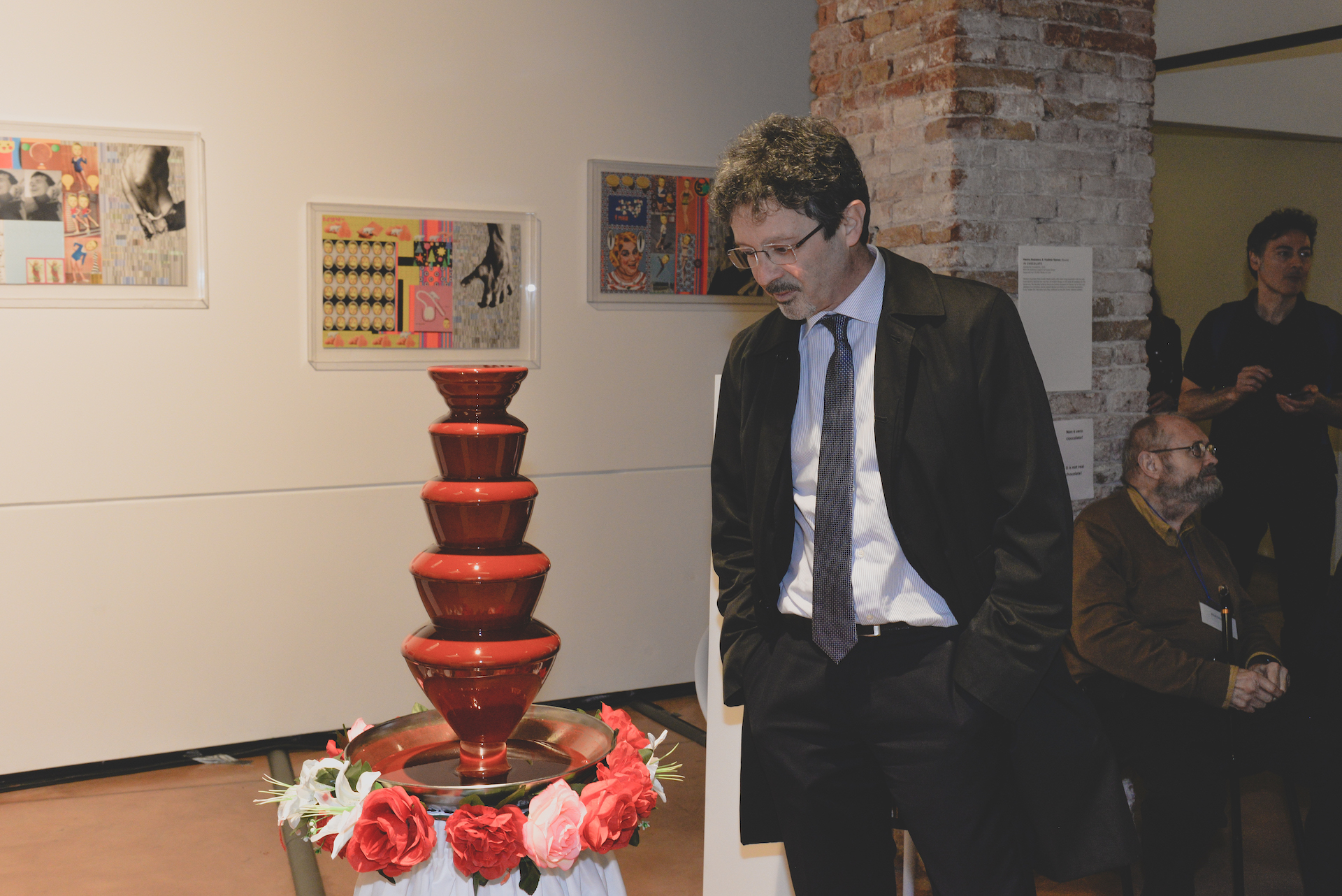
🗓️May 11 – June 28, 2019
ZATTERE CULTURAL FLOW ZONE, CSAR, CA’ FOSCARI UNIVERSITY
📍1392 Fondamenta Zattere, Venice 30123 Italy
CYLAND MediaArtLab in collaboration with Centre of Studies of Russian Art CSAR presents the exhibition ID. ART:TECH Download Press Release (PDF)
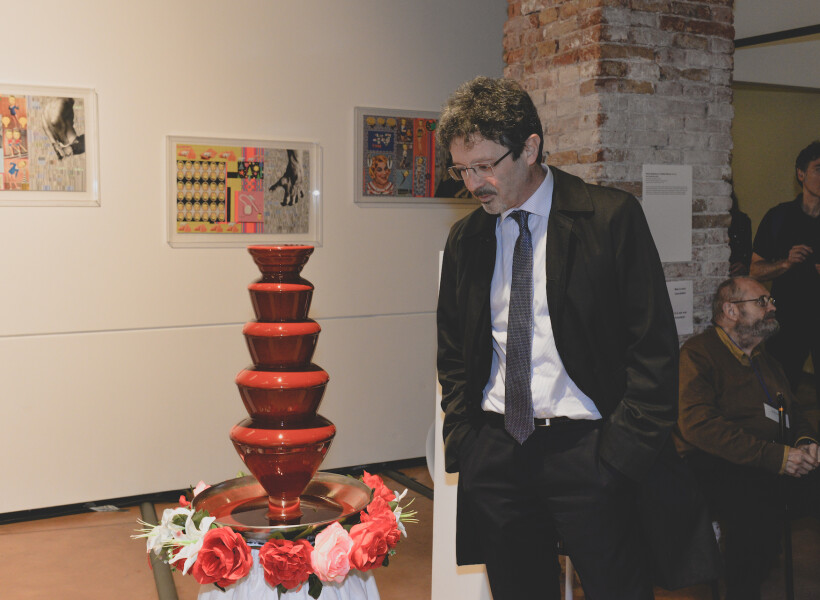
ID. ART:TECH EXHIBITION is dedicated to the ID as a phenomenon with wide scatter of meanings – from the term in psychoanalysis (id) to the document that certifies one’s identity (ID). We are interested in what ID represents in the world of people and things, what new meanings come to life when they interact and what this leads to.
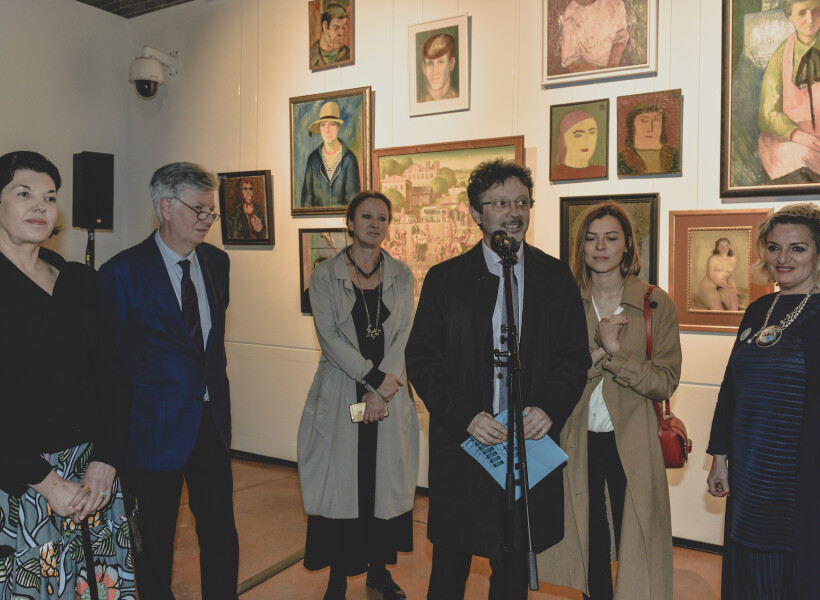
From May 10 to June 28, 2019, in the space Ca’ Foscari Zattere Cultural Flow Zone, there will be a show of works by the contemporary authors from Russia, Italy, Great Britain, USA, Belgium, France, Norway as well as artworks by the classics of the 20 th century. Among the exhibit’s participants are the New York underground guru of sound art and renowned minimalist composer Phill Niblock, Russian artist Andrey Bartenev, artist and curator of the Central Asia Pavilion at the 55 th Venetian Biennale Ayatgali Tuleubek, St. Petersburg artist, curator, winner of Sergei Kuryokhin Award and Innovation Prize Peter Belyi, distinguished Russian artist and founder of sots art Erik Bulatov and others.
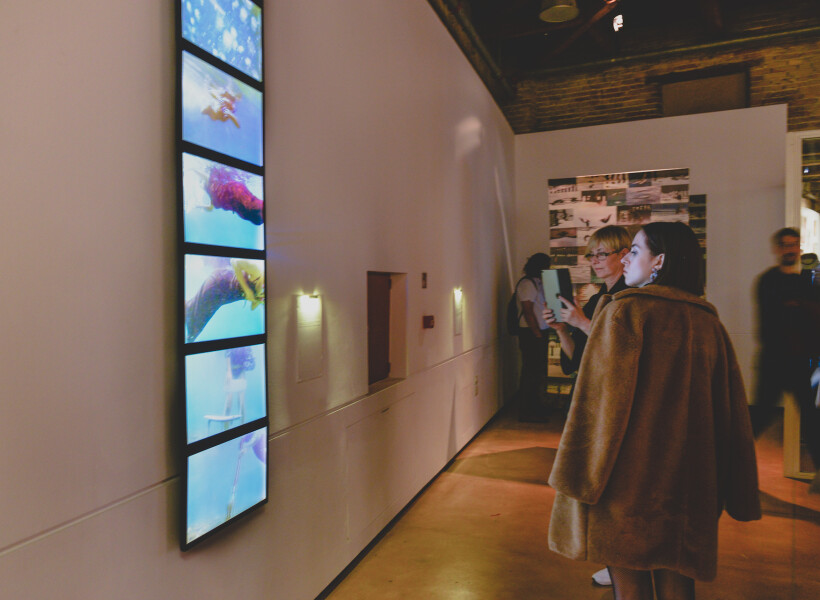
The project’s exposition is a visual examination of the subject of identification: from the forms of sociopolitical functioning of portraits of Soviet non-conformism to the images of mass culture, aesthetics of ID cards, passport picture and social networks.
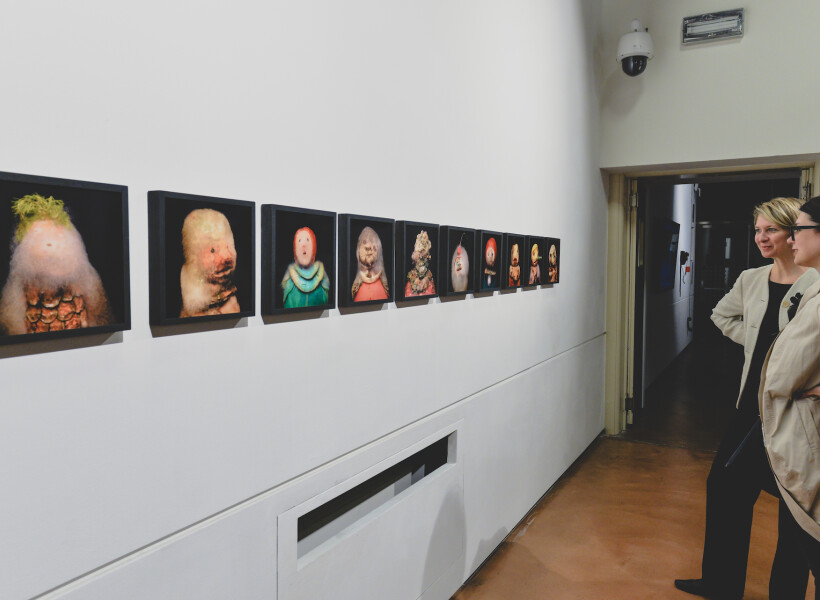
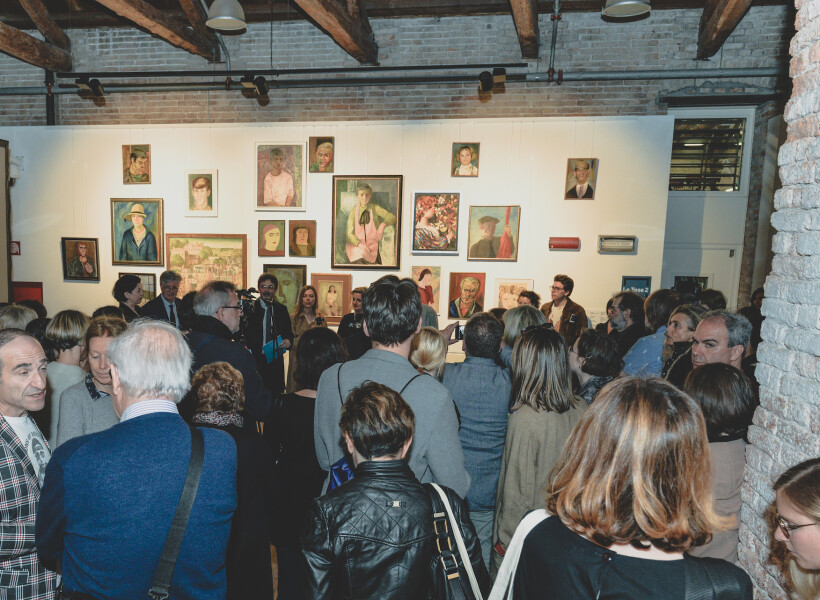
The project will unite in one space the Soviet nonofficial art from Frants Family Collection and Kolodzei Art Foundation, video-, sound-, net-art, photography, installation and everyday objects.
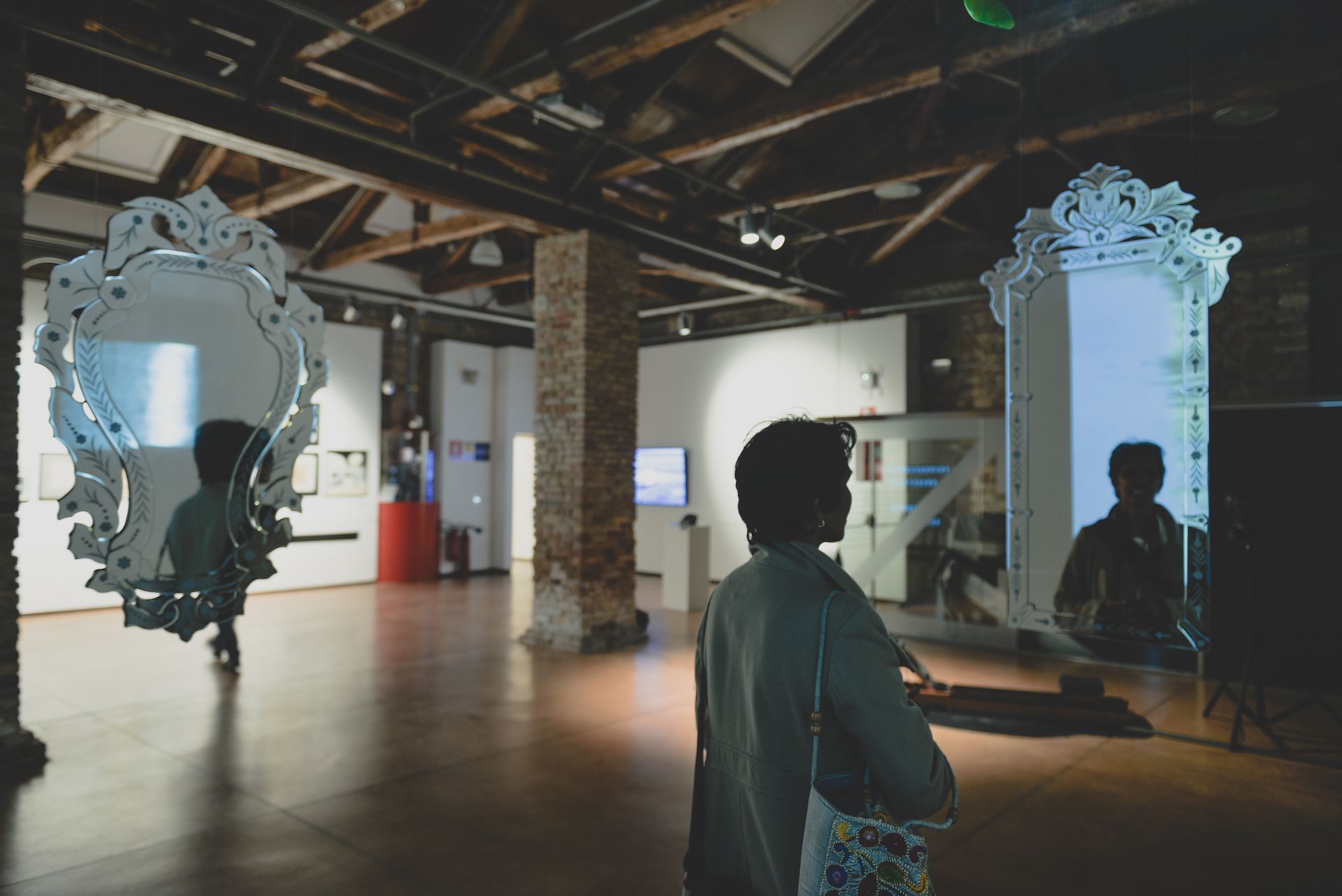
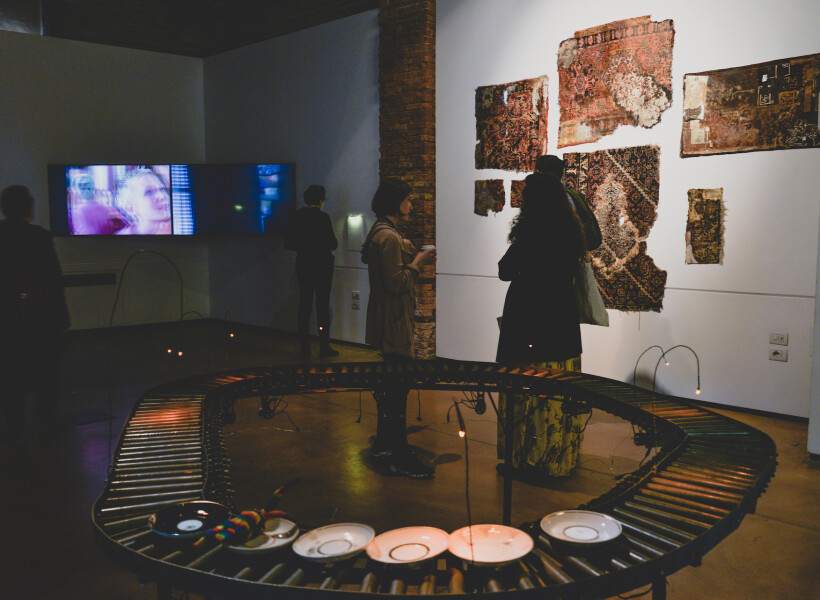
Elena Gubanova, exhibition co-curator: “High technologies at the exhibition sit side by side with common items, the metaphor of “epiphany” – with irony, fine psychologism – with corporeality, infinity of the mirror reflection – with infinity of the digital data. Painted portraits and collages of the underground artists from the times of “Soviet stagnation” lent by the collectors Natalia Kolodzei and Leonid Frants represent the time when a person’s ostracism was the price of self-identification as a free person. The video installation of the founder of American minimalism in music composer Phill Niblock and artist Katherine Liberovskaya about a depicted image engages into a dialogue with the work about a disappearing moment of St. Petersburg artist Petr Belyi. The monotonous rattle of cinema images in the video installation of the Italian artist Daniele Puppi echoes the little figures who are moving in a doomed fashion upon metal rails in the work by Anna Frants”.
Complete List of participants:
Marina Alekseeva, Vladimir Rannev and Sergey Karlov (Russia)
Karin Andersen (Germany–Italy)
Andrey Bartenev (Russia)
Ludmila Belova (Russia)
Peter Belyi (Russia)
Alexandra Dementieva (Belgium)
Jake Elwes (UK)
Elena Gubanova and Ivan Govorkov (Russia)
Farniyaz Zaker (Iran–UK)
Daniele Puppi (Italy)
Sergey Komarov (Russia) and Alexey Grachev (Russia)
Katherine Liberovskaya (Canada–USA) and Phil Niblock (USA)
Nataliya Lyakh (Russia–France)
Alexander Terebenin (Russia)
Ayatgali Tuleubek (Norway)
Anna Frants (Russia–USA)
Curators: Anna Frants, Elena Gubanova, Silvia Burini, Giuseppe Barbieri, Valentino Catricalà, William Latham, Lydia Griaznova
20th century artworks from two private collections:
Frants Family Collection, including artworks by Valentin Gromov, Tatiana Kuperwasser, Alexander Samokhvalov, Tatiana Glebova, Rodion Gudzenko, Igor Ivanov, Leon Nissenbaum, Victor Proshkin, Solomon Rossin, Rikhard Vasmi, Vladimir Yashke.
And Kolodzei Art Foundation among them: Petr Belenok, Vagrich Bakhchanyan, Erik Bulatov, Asya Dodina and Slava Polishchuk, Eduard Gorokhovsky, Vyacheslav Koleichuk, Vladimir Kupriyanov, Leonhard Lapin, Samuil Rubashkin, Oleg Vassiliev, Sergei Volokhov, Alexander Yulikov.
Events That Will Take Place as Part of the Exhibition:
May 9, 11 AM, Ca’Bottacin (calle Crosera, Dorsoduro 3911, 30123)
Portraits of New Media: Historical Exemplars
Lecture by Danielle Siembieda, Director of the International Society for the Arts, Sciences and Technology Leonardo (Leonardo/ISAST). Danielle will talk about theoretical concepts and new media examples that have cataloged the meaning of ID in the #1 publication for art, science, and technology Leonardo journal published with MIT Press since 1968.
May 10, Ca’ Foscari Zattere Cultural Flow Zone
Opening performance with participation of Phill Niblock (USA), Katherine Liberovskaya (Canada-USA), and Mia Zabelka (Austria).
Part 1: Katherine Liberovskaya: live video, Mia Zabelka: live violin and electronics.
Part 2: Phill Niblock: music and films.
Partners:
Centre of Studies of Russian Art CSAR at the Ca’ Foscari University
Ca’ Foscari Zattere Cultural Flow Zone
Big Data Solutions
St. Petersburg Arts Project Inc. (USA-Lithuania)
CYLAND MediaArtLab
Kolodzei Art Foundation (USA)
Art Center Pushkinskaya-10
With the support of
Leonardo: International Society for Arts, Sciences and Technology
Educational Center of the Hermitage
Science Gallery Venice
THE INTERNATIONAL MEDIA ART FESTIVAL CYFEST-12 will be held from December 2018 to November 2019 in New York, Venice, St. Petersburg and in other cities. The key event will take place November 2019 in St. Petersburg, Russia.
Concept
When portrait was conceived as a genre, a person was depicted at the best moment of his or her life – at the height of their maturity, strengths and actions. The portrait, the painted ID, was conferred on prosperous and influential people. Galleries of their images are kept in the museums while the metadata about the canvases’ protagonists, as to who they are and why they are depicted, break away from the carrier and settle in the archives and in the heads of experts. What’s left is the visual images that acquire multiple interpretations depending on the background of the beholders. Portrait, as a prototype of infinite interpretation, is acquiring new forms nowadays.
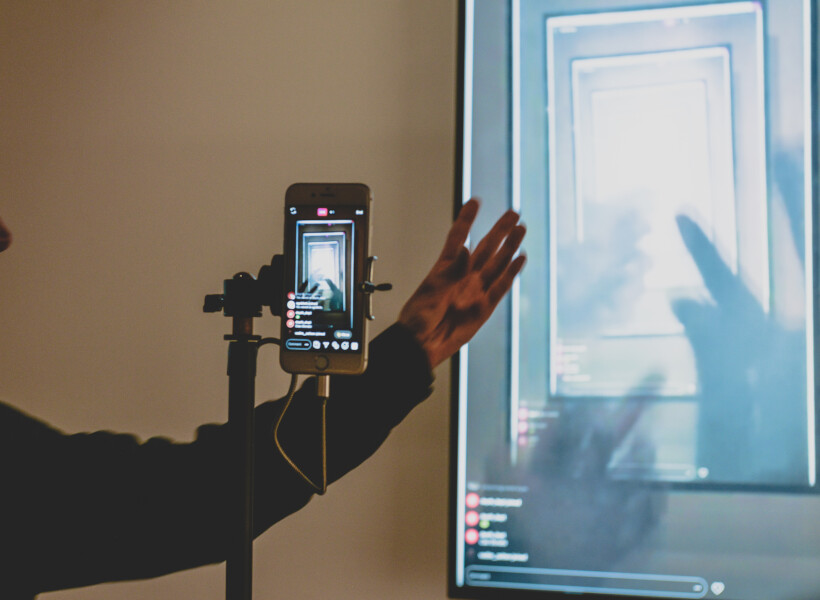
There is a vague image on the flickering screen. The spellbound Narcissus looks at the device and, with a whisking gesture to-the-left-to-the-right, choses his reflection for today. However, is he the only one who determines his choice? When he looks at the screen he watches the others and accepts, as a game rule, the fact that he himself is being watched at this moment. The glance of the others, much like one’s own glance at the others, is capable of transforming the process of image-building into the infinite roaming in a mirror gallery.
Now one can compose one’s own infinite portrait gallery of avatars for all of the life’s intents and purposes. One is able to clarify and to update the image or, the other way around, to freeze the moment and to change nothing for years, to speak about the one thing and to keep silence about the other, not to reveal oneself at all, to blend in, to create simulacra, to steal the accounts and to generate doppelgangers. The image yields both to a slight correction and to a transformation beyond all recognition. To achieve all this, one needs not to be famous, well-to-do or socially significant.
The ultimate truth becomes the body that serves as an evidence of the existence and a unique characteristic. Biometrics turns into a document. For now, one cannot relinquish the body. This reaches an absurdity – the body is necessary because it interacts with the device.
The thing-device itself has its ID and serves as its keeper for the human being. Both the thing and the person have their own set off numeric characters. People have the TIN, passport and Social Security Number. The things have their own ID – the identifier, barcode and IMEI. The entrance through a fingerprint or face recognition becomes a point of interaction between the machine and the human being. ID turns the unknown into the known, named and attributed. The authorization through the ID provides an access and prevents an entry for strangers. Logins and passwords are simultaneously a lock and a picklock.
The integrity of being and of presence in the world gets disintegrated. That which determines and forms the human being took up its residence in the number as well. One can simultaneously be in two of here and now – in the real and in the virtual. The existence gets split into a multitude of the accounts in all forms of virtual communication with the world (from the accounts in social media, mail clients, services and games to mobile phones and bank accounts). The ID freezes between the virtual and the real, the invented and the real, the body and the thing.
A lifestyle that excludes an access to the internet looks more and more like a hermit’s life. Nevertheless, to be in the internet is still useful rather than essential. An encounter with the articulated position of an internet hermit or a technoluddite who refuses to get the new version of a yet more user-friendly gadget or to have it at all reflects how the notion of day-to-day existence has changed. The reluctance to be represented or to leave a minimal footprint in the internet gains momentum while turning into a radical position bordering on marginalization. The younger the generation, the more noticeable this is. This places emphasis on how the boundary of what’s normal or conventional has shifted and on the change of how we perceive the comfortable existence whose day-to-day set of daily routine actions includes regular plunging into the internet with a secure and nonstop access to it.
“ID” has a wide scatter of meanings – from the term in psychoanalysis (id) to the document that certifies one’s identity (ID). We are interested in what ID represents in the world of people and things, what new meanings come to life when they interact and what this leads to.
Elena Gubanova, Anna Frants, Lydia Griaznova
Curators of the 12th CYFEST





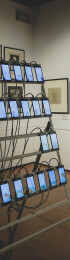






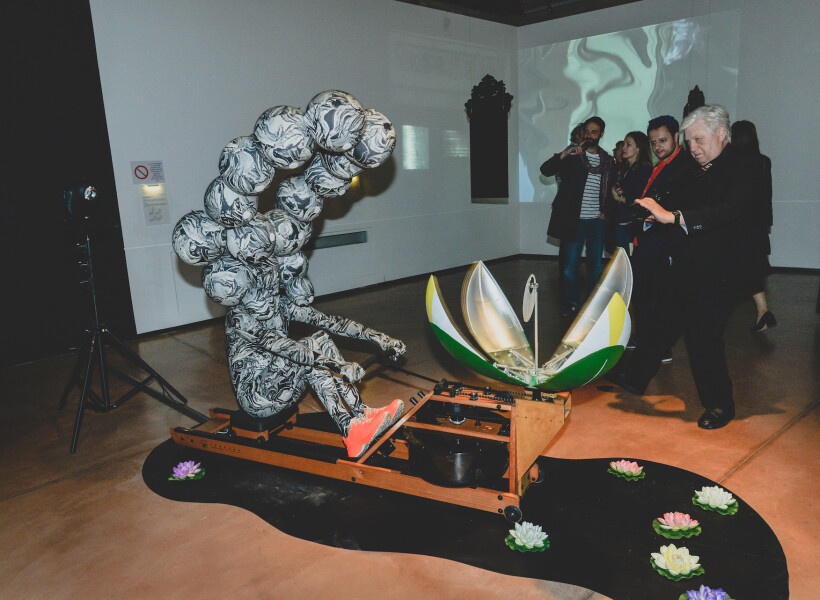
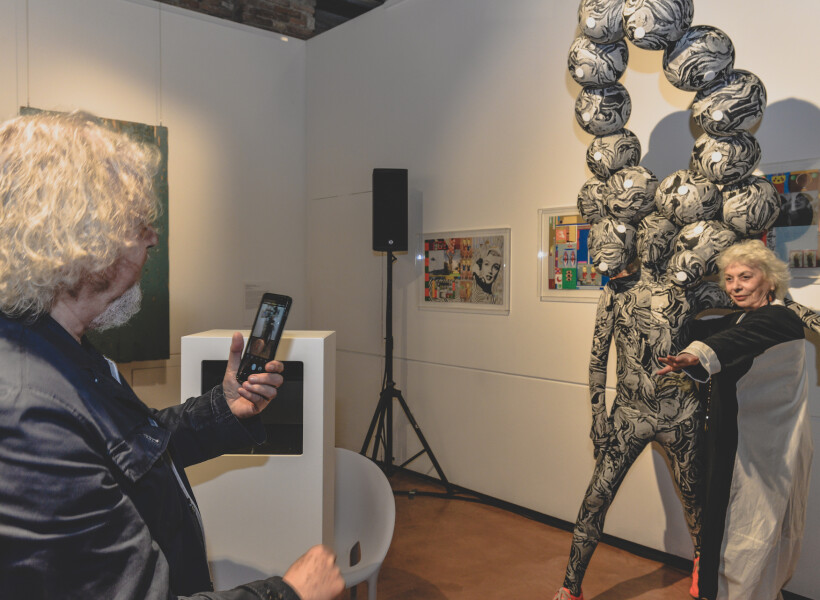
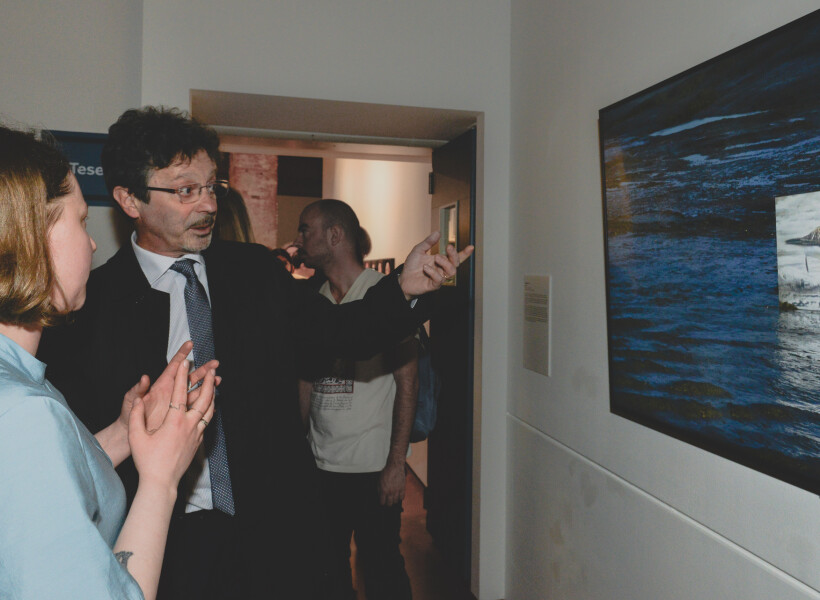
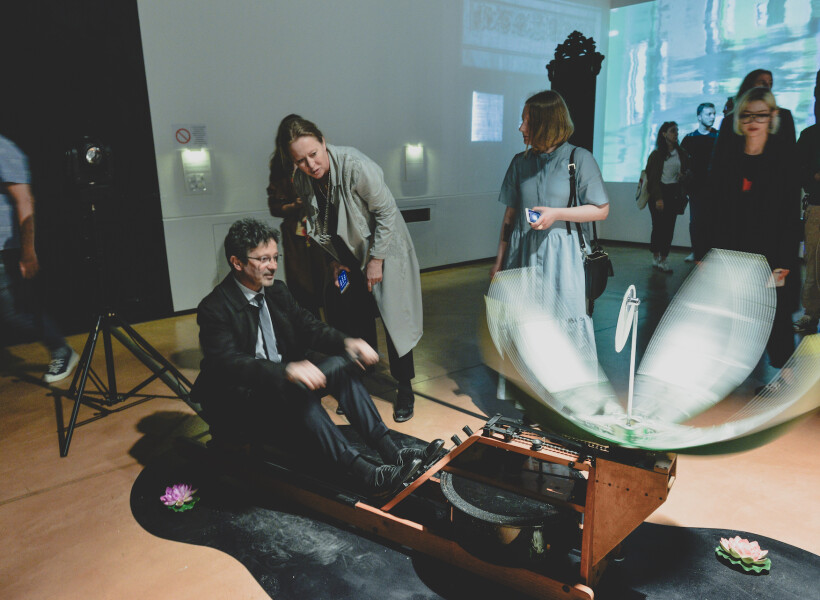
ID. ART:TECH – Exhibition tour and interviews with participants (Camera by Alexandra Dementieva)

Sponsored by

