🗓️January 27 – February 8, 2017
LUDA GALLERY
📍42 Mokhovaya St, St Petersburg 191028 Russia
◆The 10th CYFEST Exhibition Project “Mechanisms of Emergence”◆
Curated by Lizaveta Matveeva (Russia)
The history of the relationship between man and machine began long before the Industrial revolution or the invention of the steam engine and spinning loom. With the development of technology, this relationship has acquired ever greater acuity and tension. The fear of a rise of the machines has been accompanying mankind for several centuries now, and this apprehension has been articulated in many movies and books. As for the machines, they are trying to be more and more like humans and to be able to do the same things that people do in all fields. It is small wonder that they encroached on the territory of visual arts a long time ago: robots imitate the hand of an artist and create graphics or transform original graphics into 3D sculptures. The development of technologies also accounts for the fact that artists have started actively using them in their works: the turn of the century saw the emergence of video and sound art as well as cyber and media art.
Humanism, whose carrier has always been a creator, is subjected to cyberattacks: the simplification of manufacturing everything and the accessibility of archives and high technologies, on the one hand, make an artist an omnipotent demiurge and, on the other, they give rise to resistance and impel the creation of a system of self-limitations. An artist who poeticizes any form of the nonhuman and mechanistic and longingly looks at an old printer or a roll of Svema film made in 1989 carries in their work a nostalgia for obsolete technologies that have become so defenseless. This new tendency has come about in opposition to the ultramodern and super-technological — everything that is considered to be the current trend. This system forces the artist to reject the latest achievements of technology that continues its mimicry of the human being and to turn to materials from the past that have greater credibility — which becomes the theme of exhibition: the interaction and confrontation between the artist and technologies, the original and the surrogate, the accidental and the predictable — an inexhaustible conversation about time and the mechanisms of the emergence of a work of art.
Participants:
Recorded performance, 2014
Project by CYLAND MediaArtLab
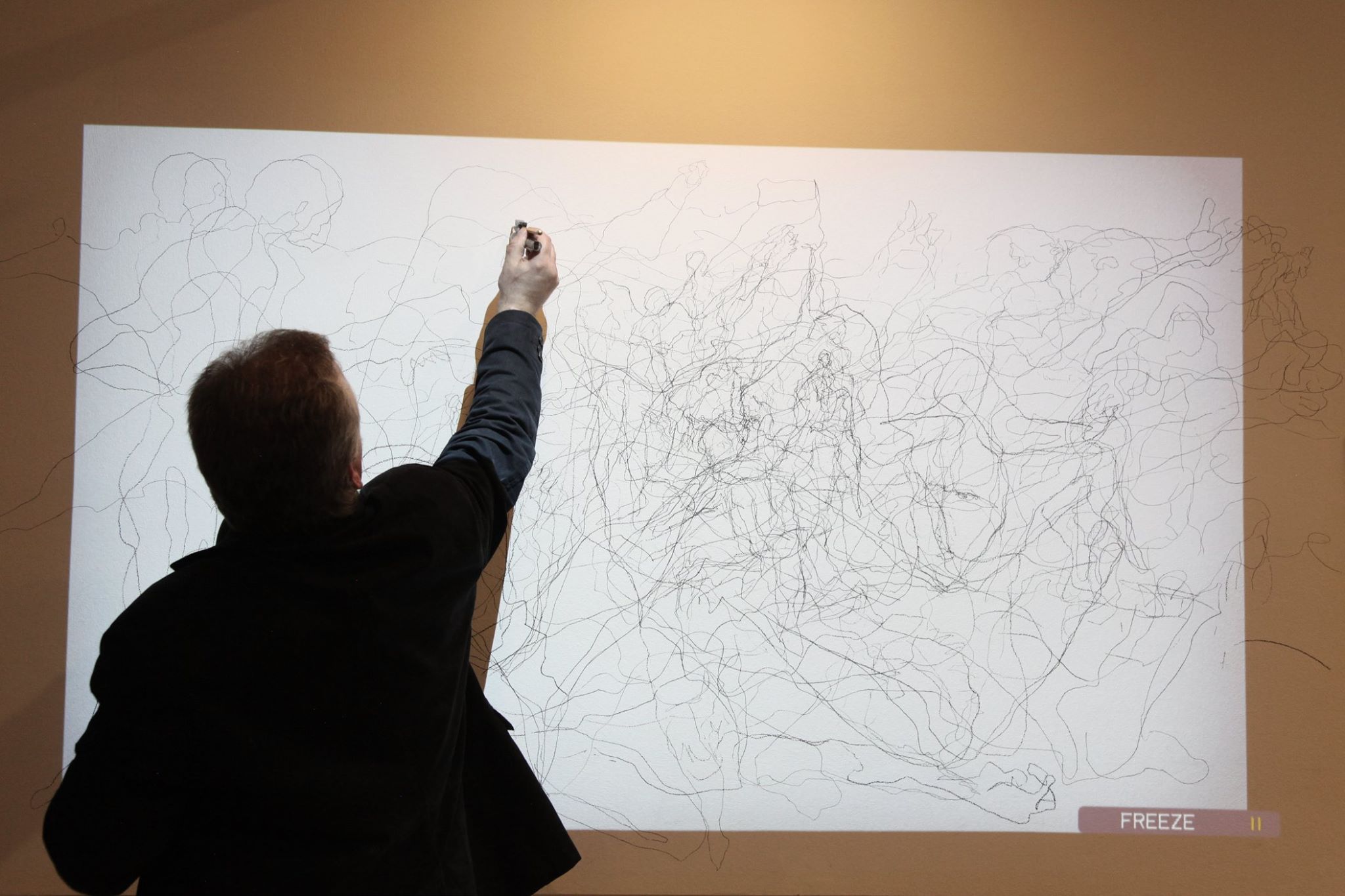 The performance by Ivan Govorkov and Daniil Frants is first of all a dialog between art generations: Govorkov is a professor, a professional with academic education and a drawing virtuoso; Frants is a computer programmer and a specialist in the creative use of new technologies. The question that the artists raise in this work is quite pressing for current art practices: to what extent is it possible to integrate technologies into traditional art? Frants transforms Govorkov’s graphic improvisations into a three-dimensional form with the help of a computer program of his creation, computer modeling, a modern scanner and a 3D printer. By adding virtual space to pencil lines, Frants creates an absolutely new art object in real space.
Artist. Born in 1949 in Leningrad, USSR. Graduated from the Ilya Repin State Academy Institute of Painting, Sculpture and Architecture (Leningrad, USSR). He is engaged in philosophy, psychology, painting, drawing, sculpture and installations; he works at the junction of traditional art and cutting-edge technologies. Professor of drawing at the Ilya Repin Institute. Recipient of Sergey Kuryokhin Award (Russia, 2012) in the category “Best Work of Visual Art” (together with Elena Gubanova). His works were exhibited at major Russian and foreign venues, including Hermitage Museum (St. Petersburg, Russia), Russian Museum (St. Petersburg, Russia), Museum of Moscow (Moscow, Russia), University Ca’ Foscari (Venice, Italy), Chelsea Art Museum (New York, USA), Kunstquartier Bethanien (Berlin, Germany), Sky Gallery 2 (Tokyo, Japan). Participant of the Manifesta 10 Biennale Parallel Program (St. Petersburg, Russia, 2014) and several exhibitions parallel to Venice Biennale (Italy, 2011, 2013, 2015); many times participant of the Cyfest Festival. Since 1990, he has been working in collaboration with Elena Gubanova. Lives in St. Petersburg, Russia.
Programmer, artist. Born in 1998 in New York, USA. He is currently a high school sophomore at the Dwight School (New York, USA). Has had an internship at MIT (Massachusetts Institute of Technology, USA) at the age of 14. At the age of 15, Frants founded his company, Frants Innovators Inc., of which he is the CEO. Frants Innovators designs products that aim to solve an array of issues. Among these are an on-head display which provides closed captioning so that the hearing impaired can have natural conversations, and a watch which displays Braille so that visually impaired people can have a way to tell time which feels natural. He has done numerous robotics workshops, lectures on technology, and art projects worldwide in locations including Tokyo (Japan), New York (USA), Berlin (Germany), St. Petersburg (Russia), and Kiev (Ukraine). Lives and works in New York, USA.
Graphics, 2016
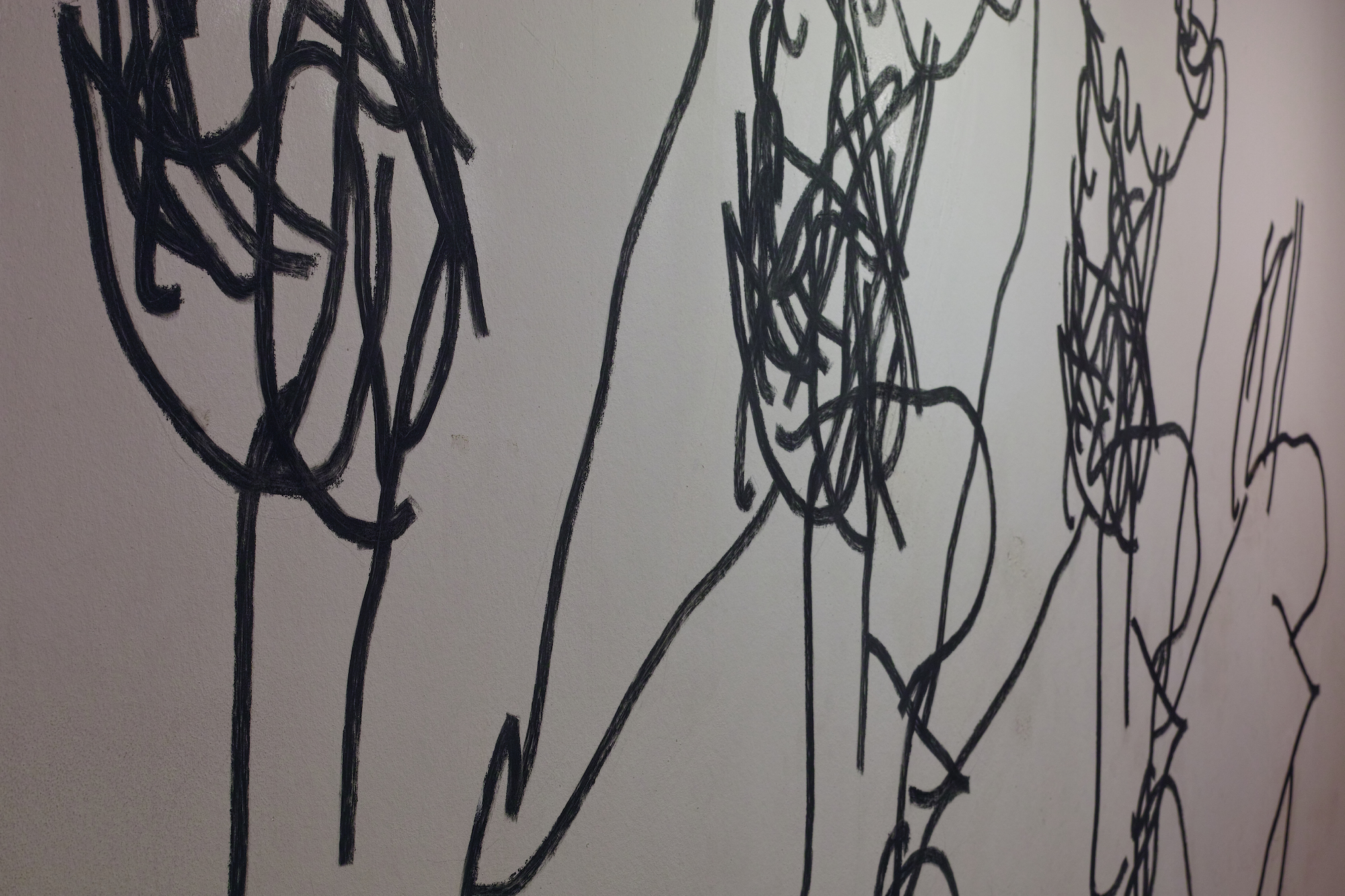
A device becomes an artist. An artist becomes a device. The roles change. The virtual acquires the properties of the physical; material discovers that it is digital. Everything is topsy-turvy, time after time… Nonsense Mamba Jamba!
Ilya Grishaev
Artist. Born in 1984 in Perm, USSR. Graduated from the Perm Humanities and Technology Institute’s department of design (Russia) and the “School for Young Artists” at the Pro Arte Foundation (St. Petersburg, Russia). Exhibited personal projects at Anna Nova Gallery and in the studios at Nepokorennykh, 17 (St. Petersburg, Russia), as well as at the “Start” venue at “Vinzavod” (Moscow, Russia). Participated in group exhibitions in Perm, Moscow, London, New York. Lives and works in St. Petersburg, Russia.
Graphics, installation, 2011–2017
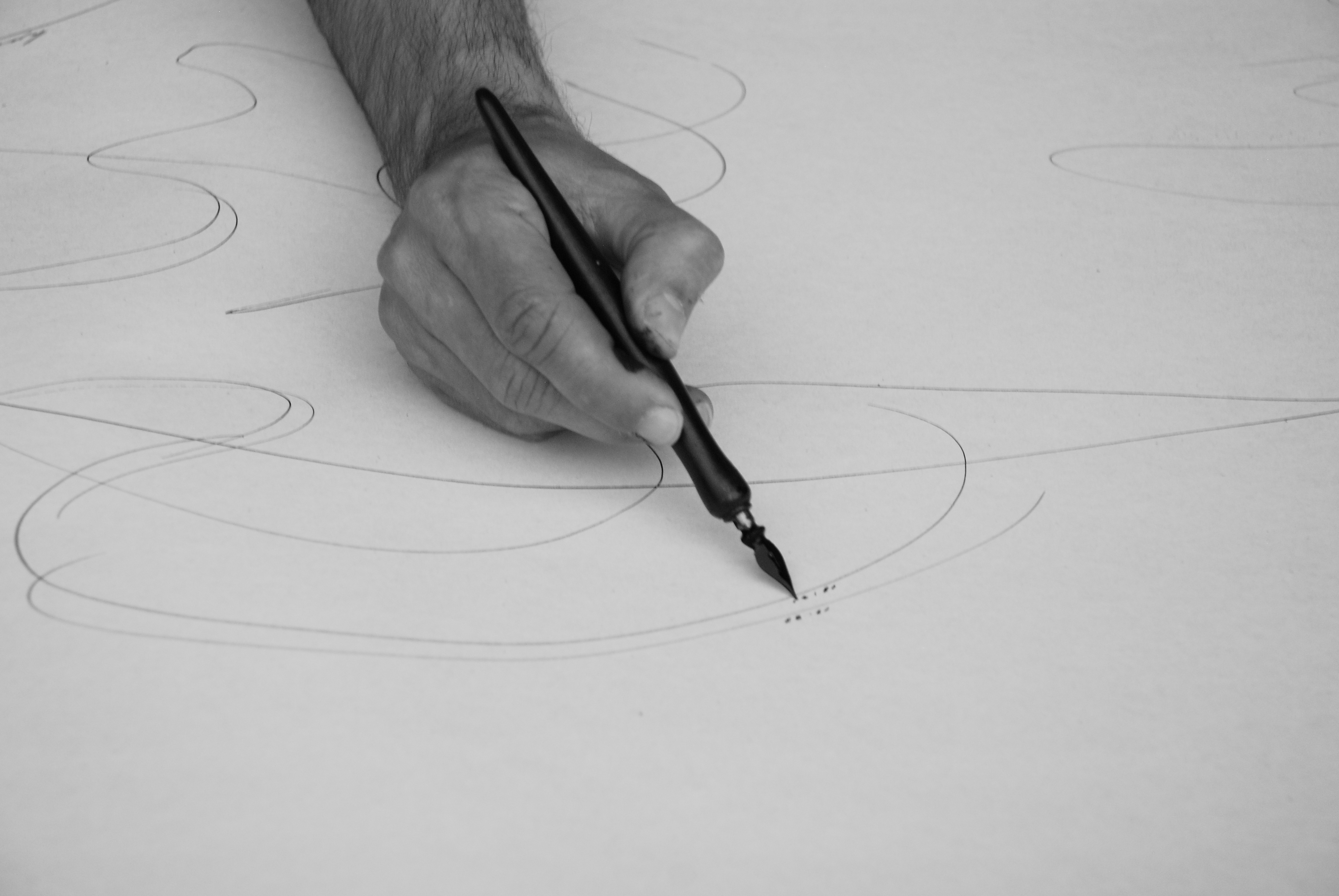
Since the autumn of 2011, Alexander Morozov has been registering birds’ movements. At first he sketched their flight from the balcony of his studio on the Karpovka Riverembankment, but now the project’s geography includes several cities. These sightings lasting 10 minutes have become the basis for numerous drawings and installations. The project’s archive is added to every day. This series does not document what the artist saw, it rather talks about a state of presence, contemplation and detachment. On the one hand, these are the sketches of the space outside the window, while on the other hand they are temporal landscapes and the artist’s personal journal.
Alexander Morozov
Artist. Born in 1974 in Lugansk, USSR (now Ukraine). Graduated from the Ilya Repin Institute of Art, Sculpture and Architecture (St. Petersburg, Russia) and completed the program “Practicum. New Technologies in Contemporary Art” at the Pro Arte Institute (St. Petersburg, Russia). He works in various genres of cutting-edge art: object, installation, graphics, video, painting. Personal projects of Morozov have been exhibited in Moscow, St. Petersburg (Russia) and Tartu (Estonia). Participant of the Krasnoyarsk Museum Biennale (2015) and the Moscow Biennale of Contemporary Art (2015). Lives and works in St. Petersburg and Moscow, Russia.
Animation diptych, 2016
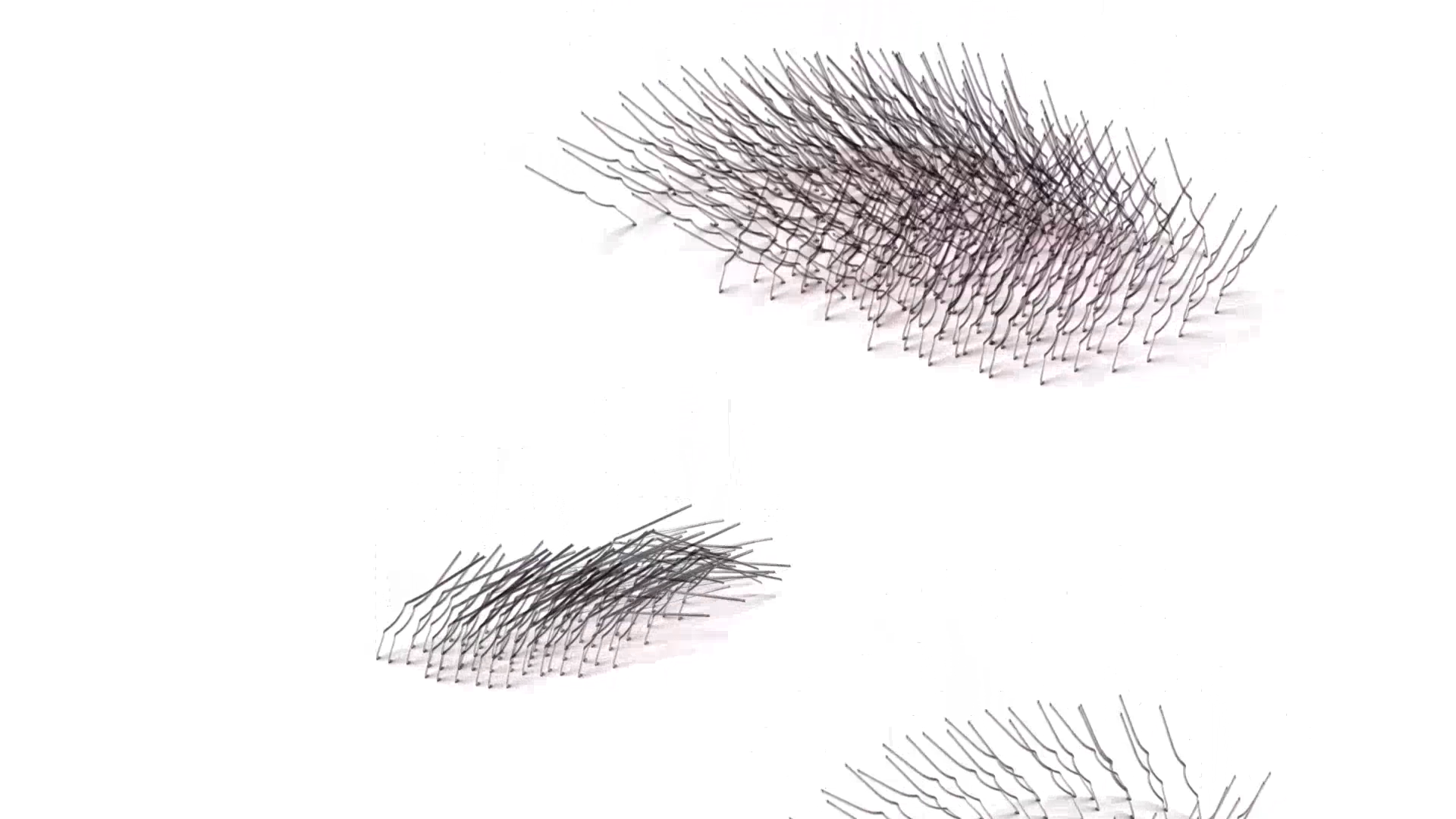
The work consists of two parts: “Grass” and “Surface”. Using animation (partly computer, partly stop-motion), Elena Slobtseva models abstract turf with office staples. The staples that, much like the grass, cling to the surface, link and destroy it, are depersonalized and interchangeable. Through manipulative fetishist action, a story is created about the (non)life of the (non)living. The story is predicted by the author, but performed by a computer program; here and there, it discontinues, syncopates and closes on itself.
Elena Slobtseva
Artist. Born in 1981 in Perm, USSR. Graduated in English Language and Literature from the Perm University, Russia; then studied at the School of Contemporary Art “ArtPolitika” (Perm, Russia) and at the School of Engaged Art “Chto delat?” (St. Petersburg, Russia). She usually works with her preferred material — office and construction staples — in the media of animation, object and installation. The themes that she turns to are the body, the city and urban aesthetics. She took part in the Moscow Biennale of Young Art (2014) and in several group shows in Perm and Moscow, Russia. Lives and works in Perm, Russia.
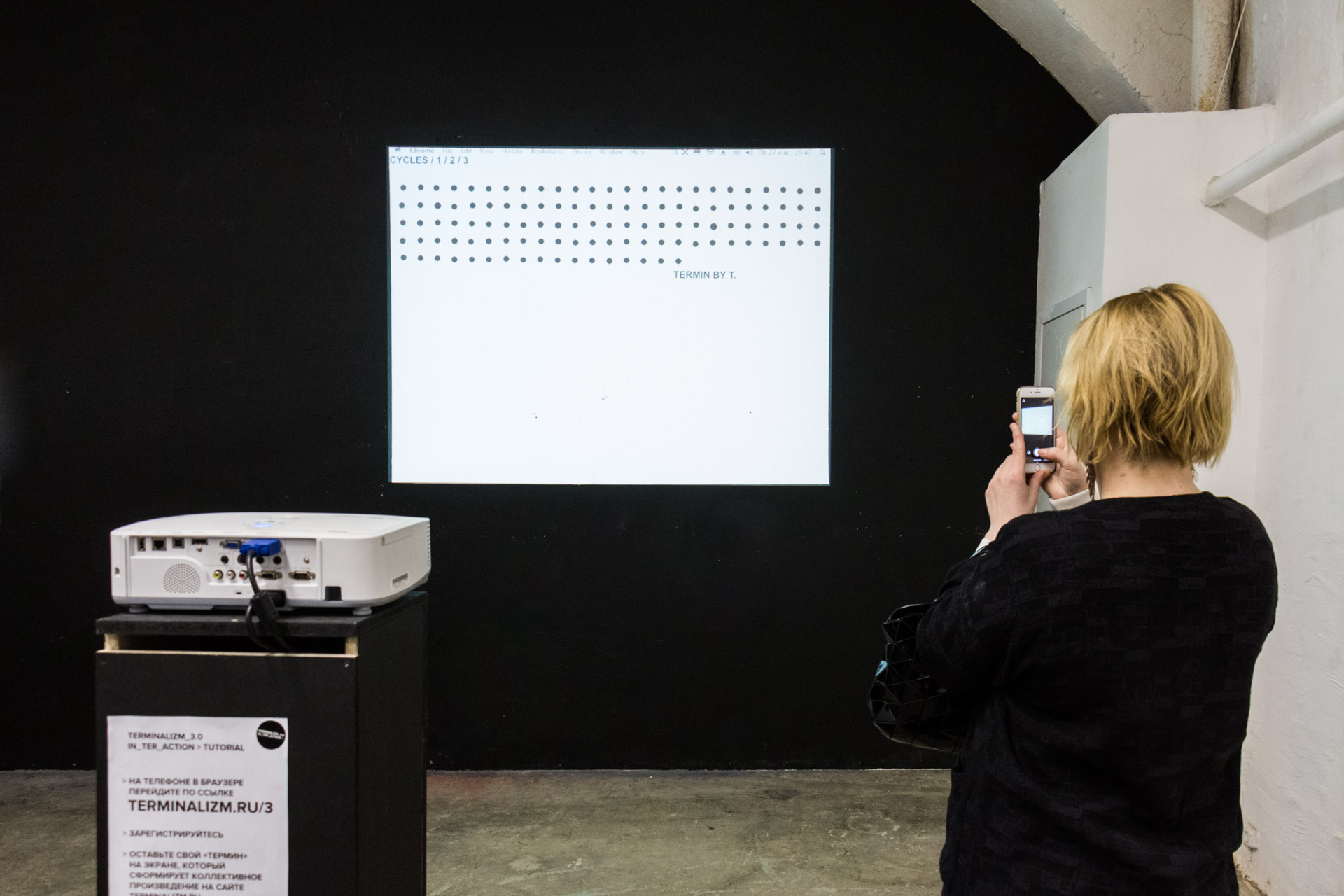
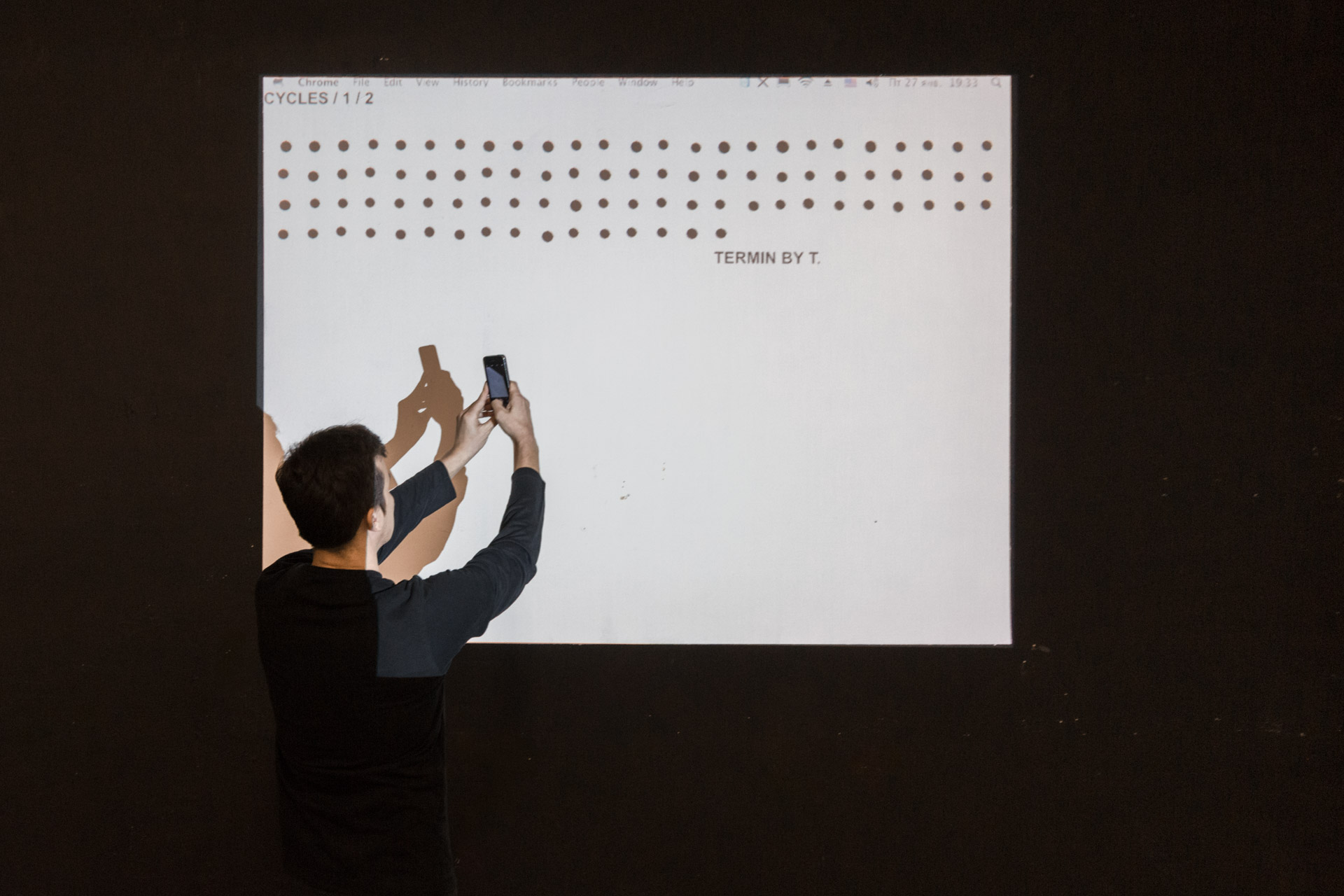
Performance, 2017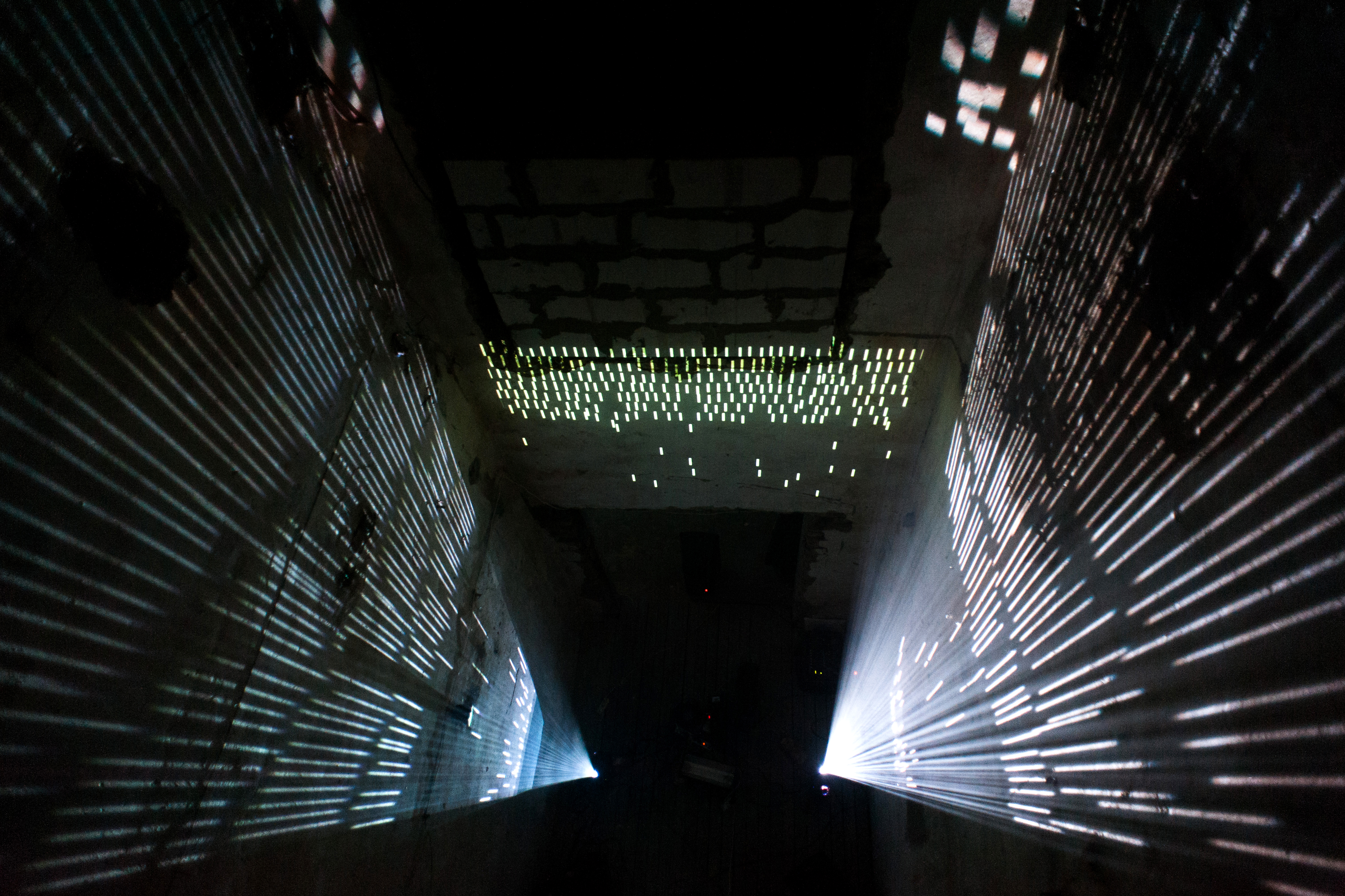
Terminalizm is a movement in contemporary art formulated by the company “Terminal Design”. It involves the depersonalization of self-expression of a group of people within rigid rules. Terminalizm is based on rhythm, on the repetition by several authors of one term, one graphic form or phrase, one image or sound.
Terminal Design Group
Design group founded in 2007 in St. Petersburg (Russia) by Ivan Kulikov, Vladimir Zolotsev, Yury Shevelev and Kirill Petrov. The group has formulated the concept of terminalism — a new movement in contemporary art that involves an impersonal self-expression by several authors within the scope of rigid rules.
Installation, 2012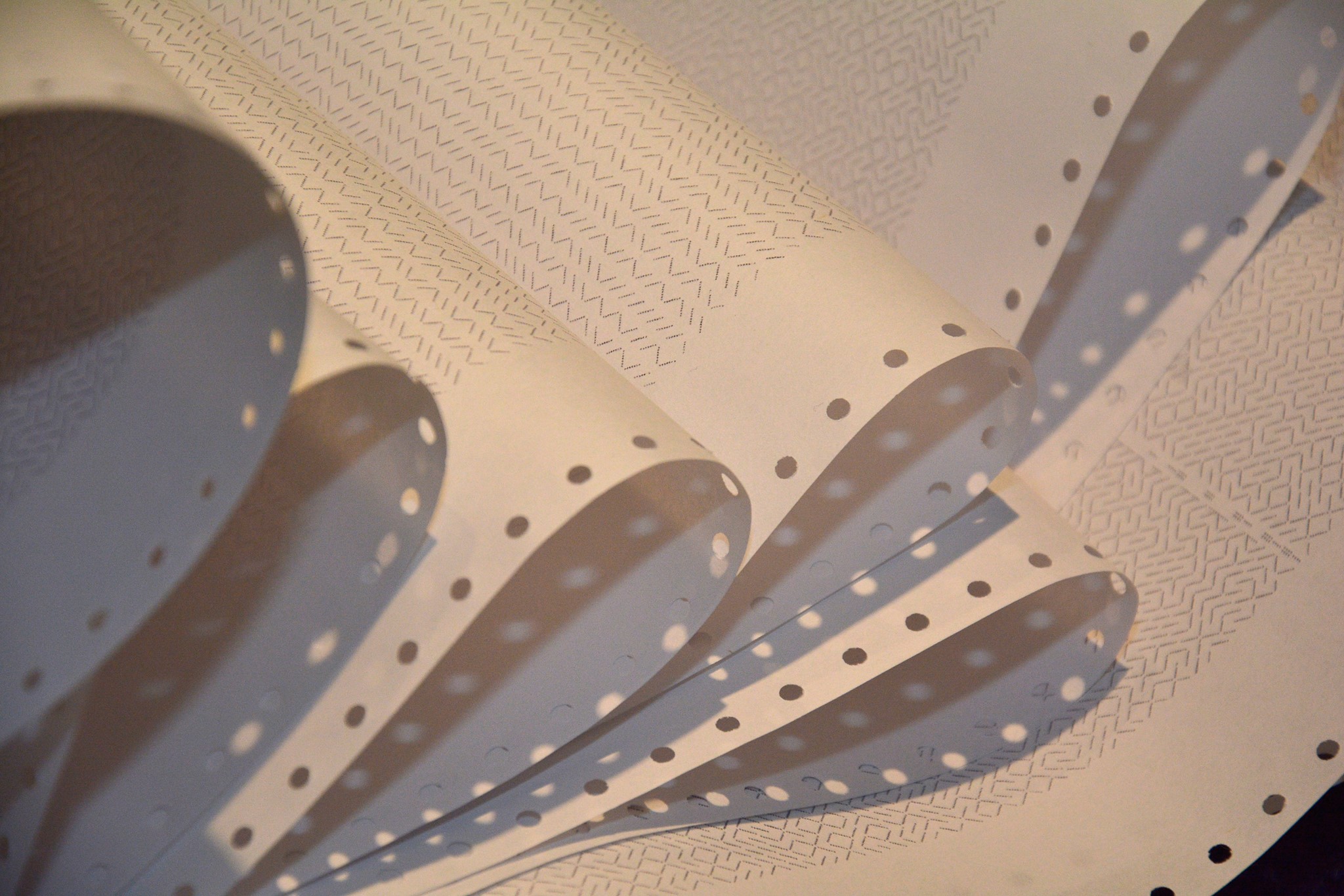
The Bulgarian monk Chernorizets Hrabar claimed that the early Slavs had a Pre-Cyrillic writing system of “strokes and incisions”: “The Slavs did not used to have letters, but they read by strokes and incisions and told fortunes by them, being pagans…” The ambivalent nature of this sole mention and the lack of written artifacts leave room for hypotheses. The strokes and incisions — is this the name of two categories of symbols in one alphabet or independent sign systems for writing words and numbers? Morse Code? Two signs, the universal binary code that we know as a sequence of zeroes and ones? A birch-bark Turingmachine: stroke-incision- stroke-stroke \///\//, heads or tails. We read and tell fortunes.
Ivan Khimin
Artist, curator. Born in 1975 in the USSR. He graduated from the Institute of Film and Television (St. Petersburg, Russia) and completed the program “New Technologies in Contemporary Art” at the Pro Arte Institute (St. Petersburg, Russia). In 1997, together with the art historian Ivan Chechot and the gallery Navicula Artis, he participated in the project “Sentimental Journey” — a three-day art action in the genre of conceptual stroll. The scope of Khimin’s interests includes media art, ready-made, media archeology, software art, installation and post-digital painting. He curated art projects in Russia and abroad. Lives and works in St. Petersburg, Russia.
About the curator
Lizaveta Matveeva
Art critic, curator. Born in 1991 in Arkhangelsk, Russia. Received a Master’s Degree from the Department of Liberal Arts and Sciences at St. Petersburg State University majoring in Art Criticism (St. Petersburg, Russia) and graduated from the Third Moscow Summer Curatorial School organized by Viktor Misiano and V-A-C Foundation (Moscow, Russia). Co-curator at Luda Gallery (St. Petersburg, Russia). Curator and co-curator of exhibition projects in the field of contemporary art including “Disguises” at the Sheremetev Palace (St. Petersburg, Russia, 2016), “New Blockheads” at the Moscow Museum of Contemporary Art (Russia, 2016), “Shape of Unseen” at the Winzavod Center (Moscow, Russia, 2016), “Let us think on a clear day» at the Museum of St. Petersburg Avant-Garde (St. Petersburg, Russia, 2014). Lives and works in St. Petersburg, Russia.

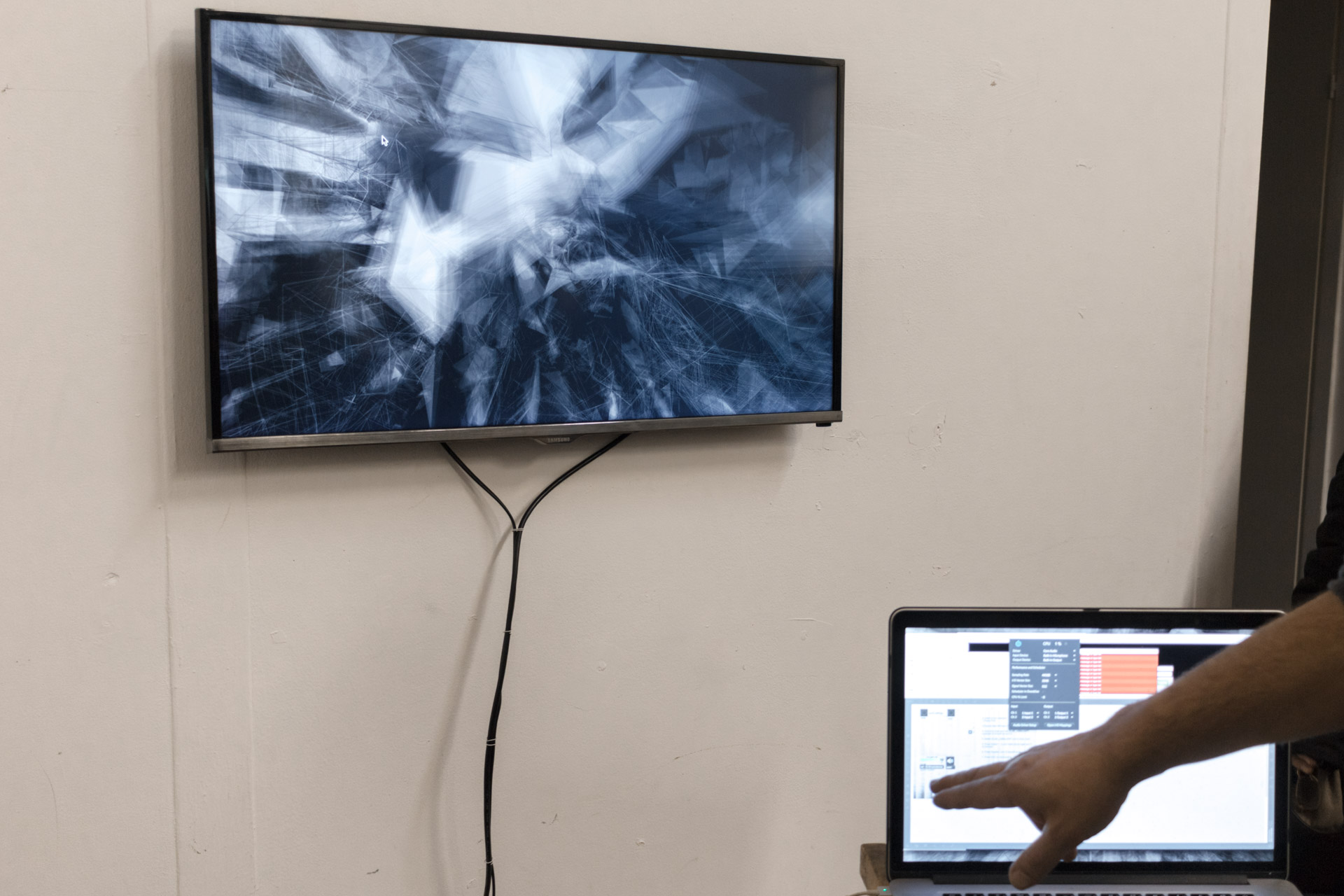
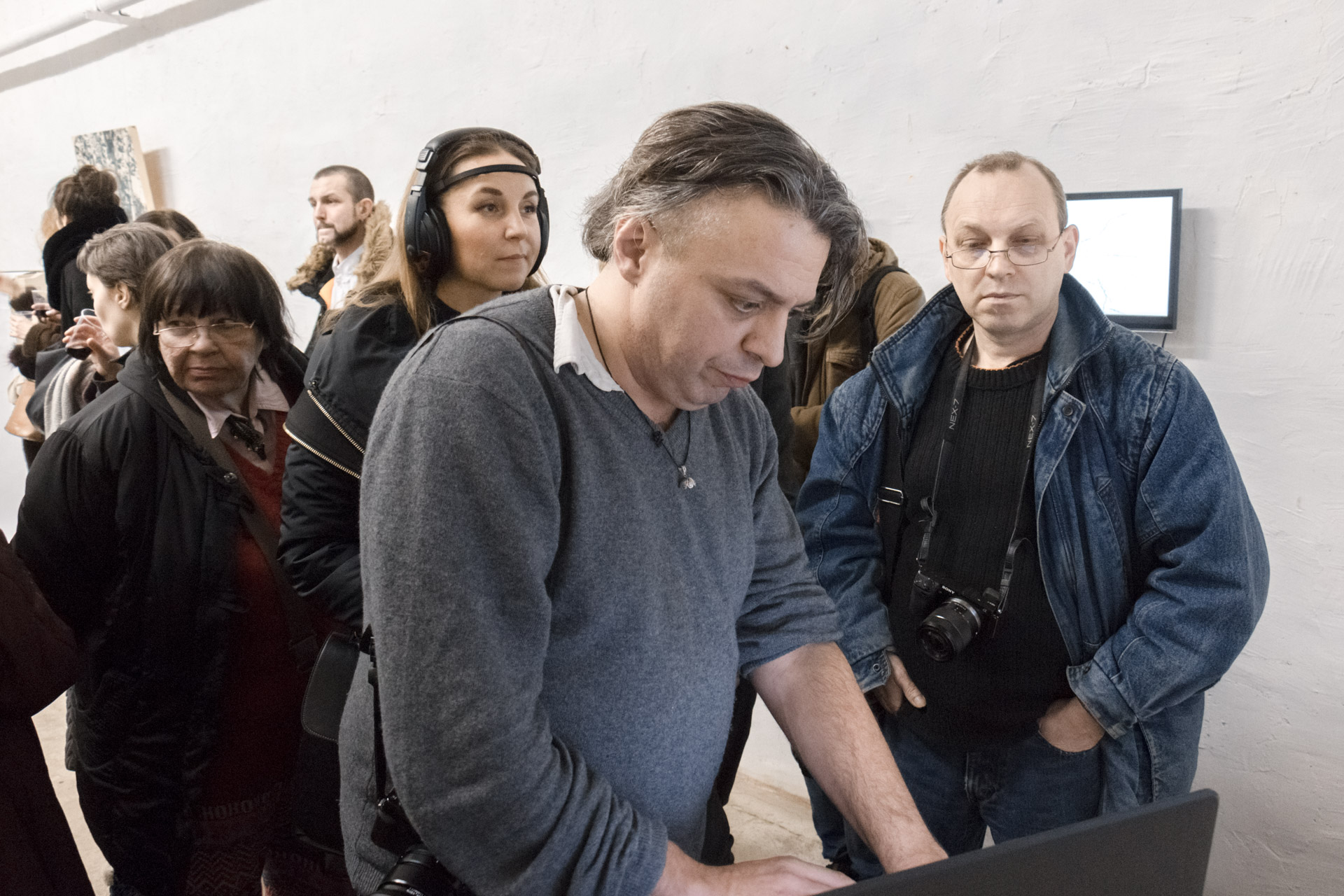
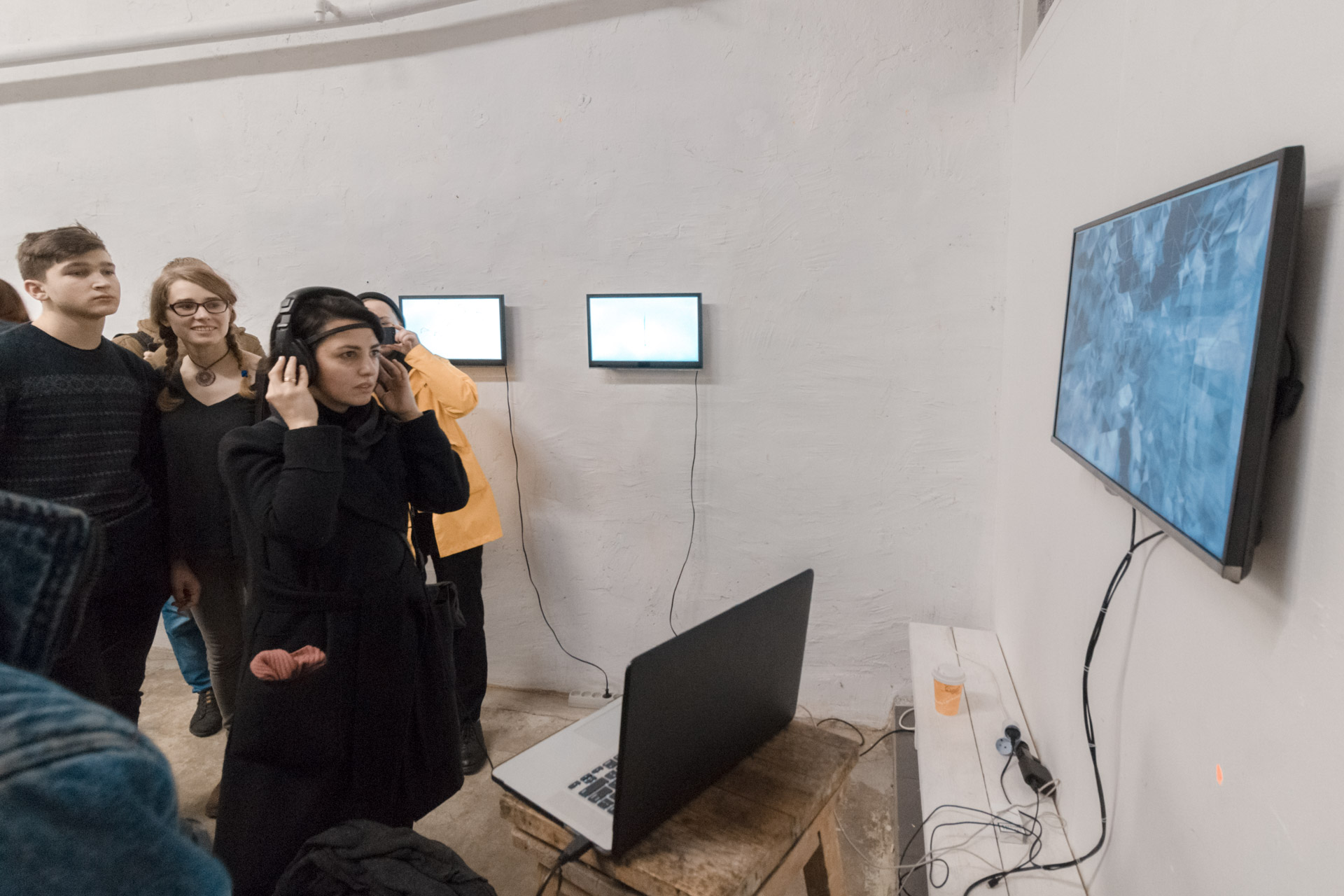
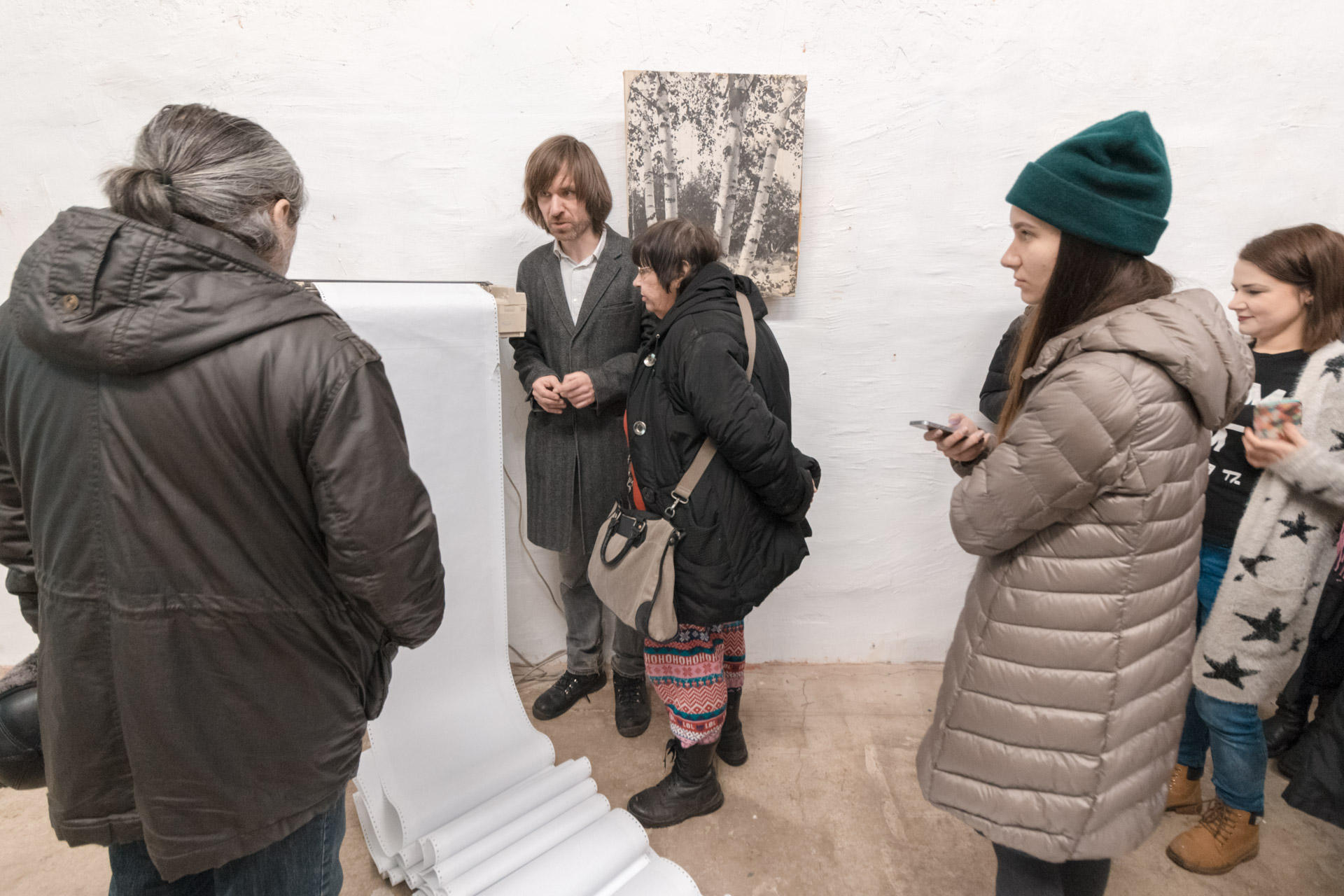
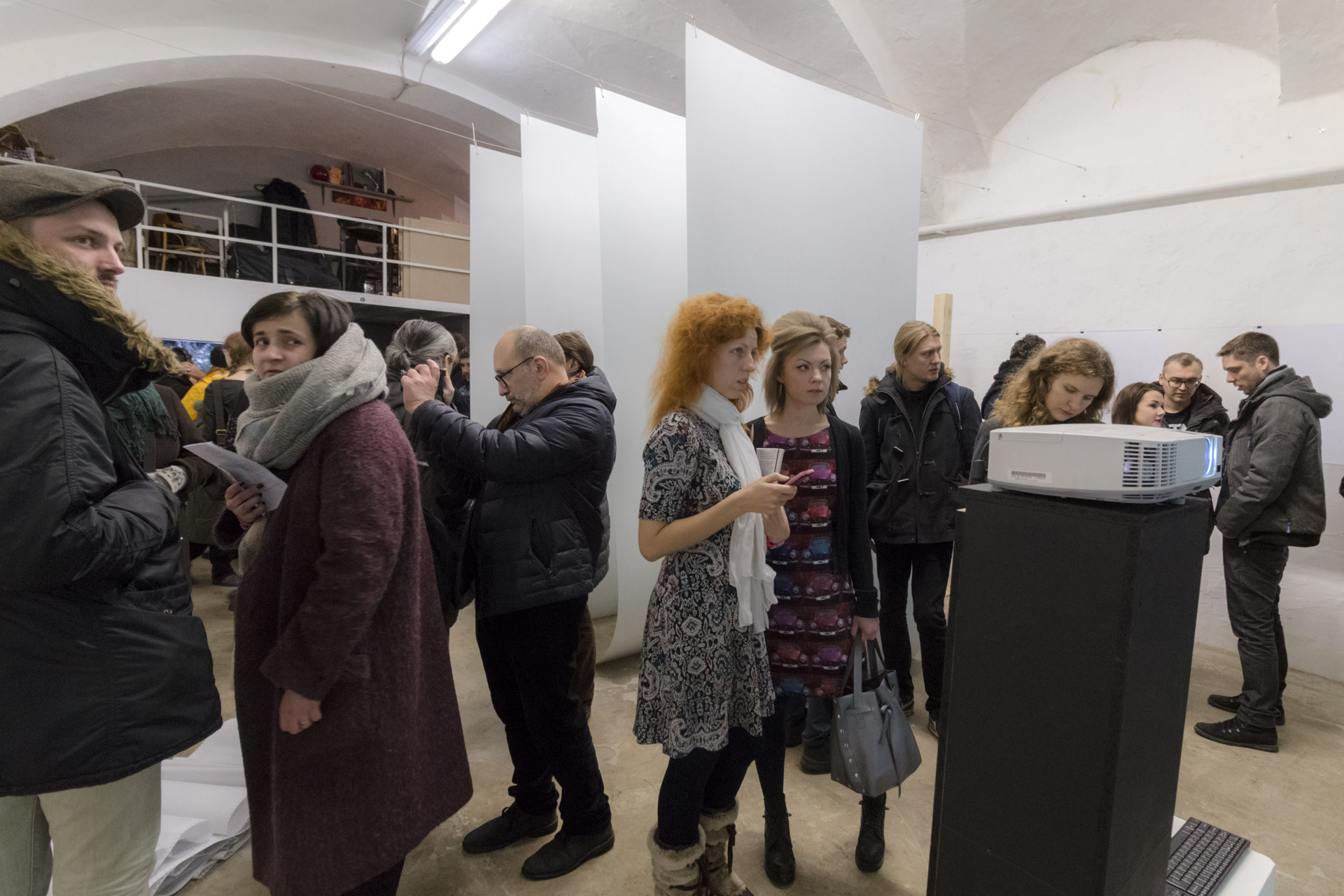
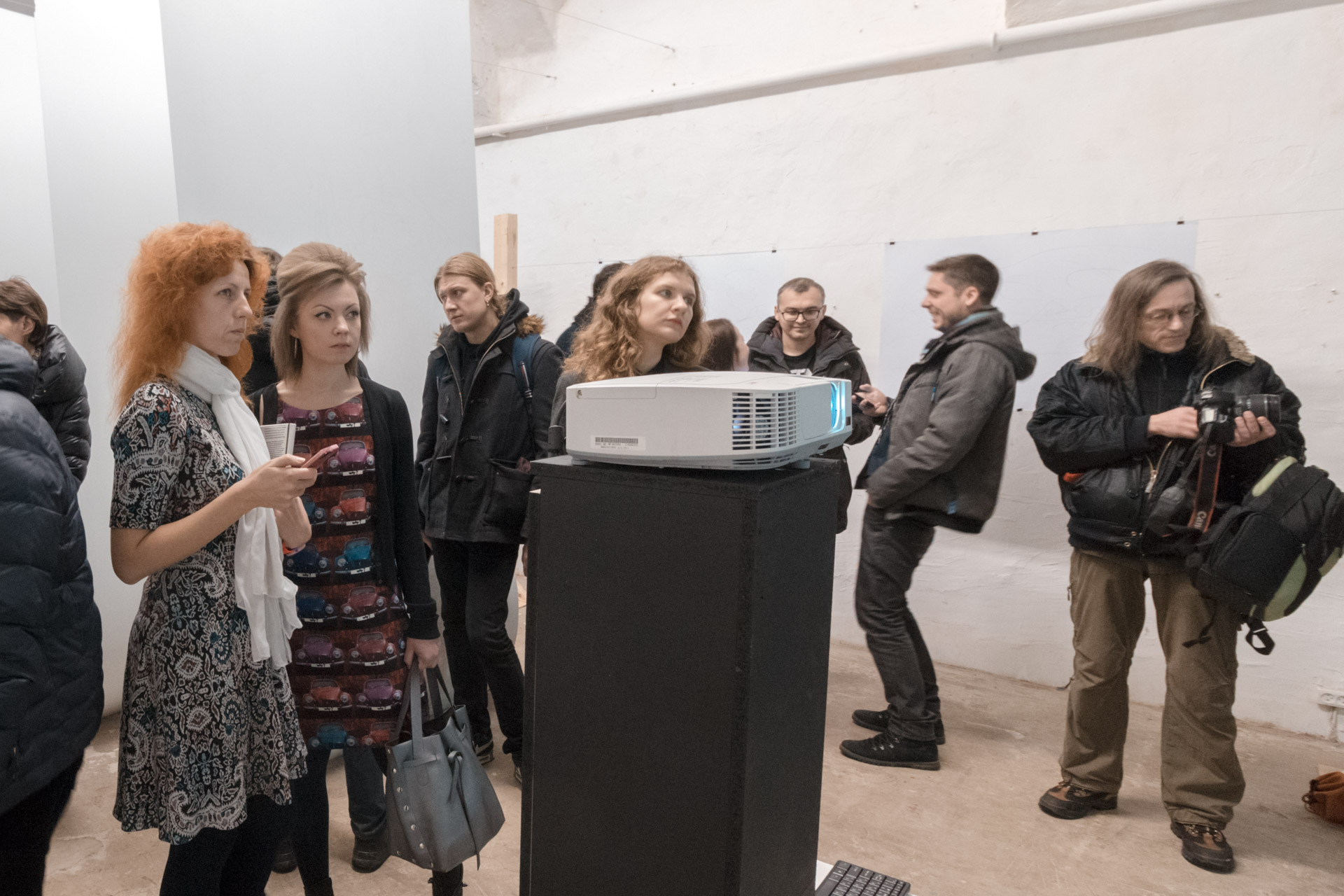
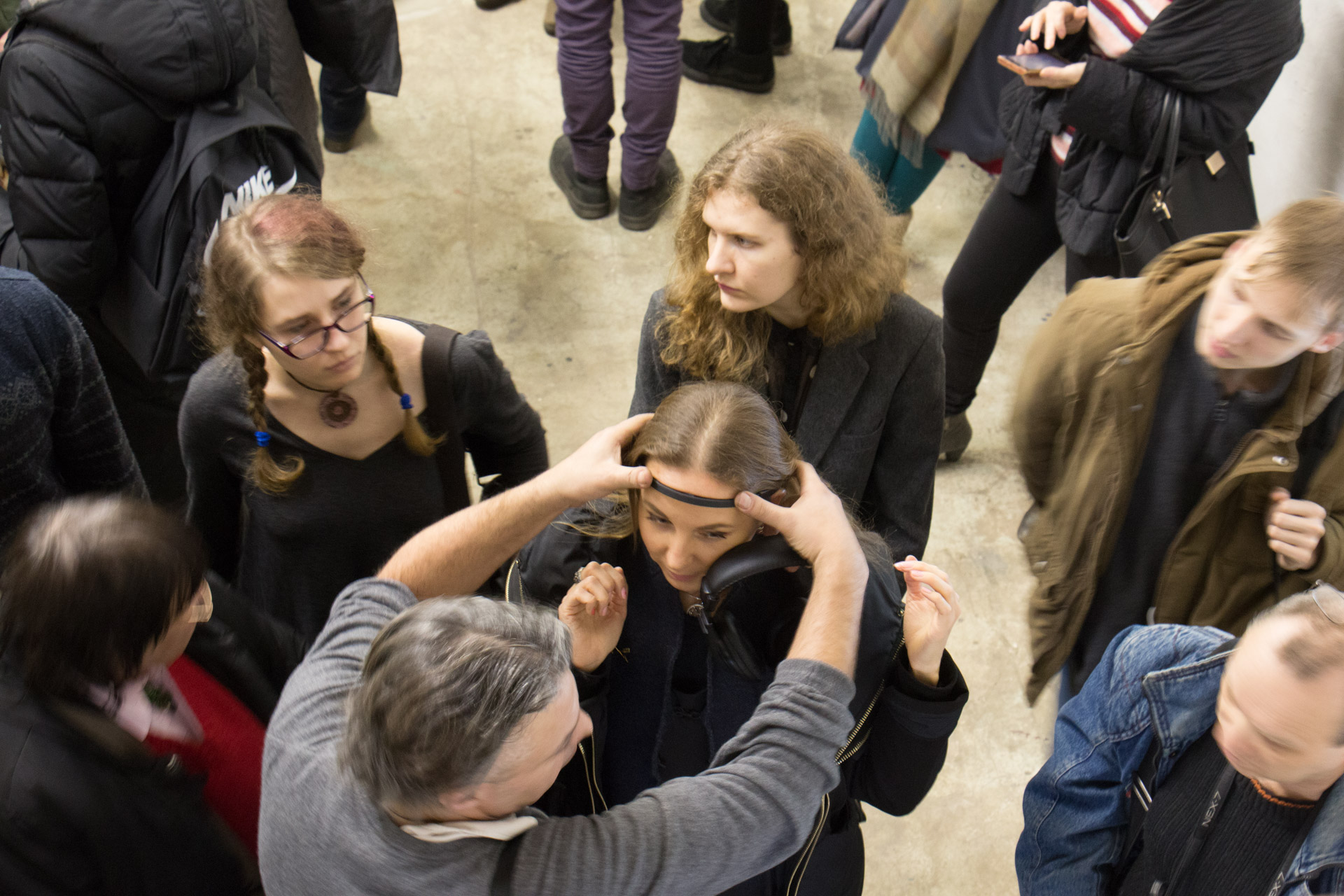
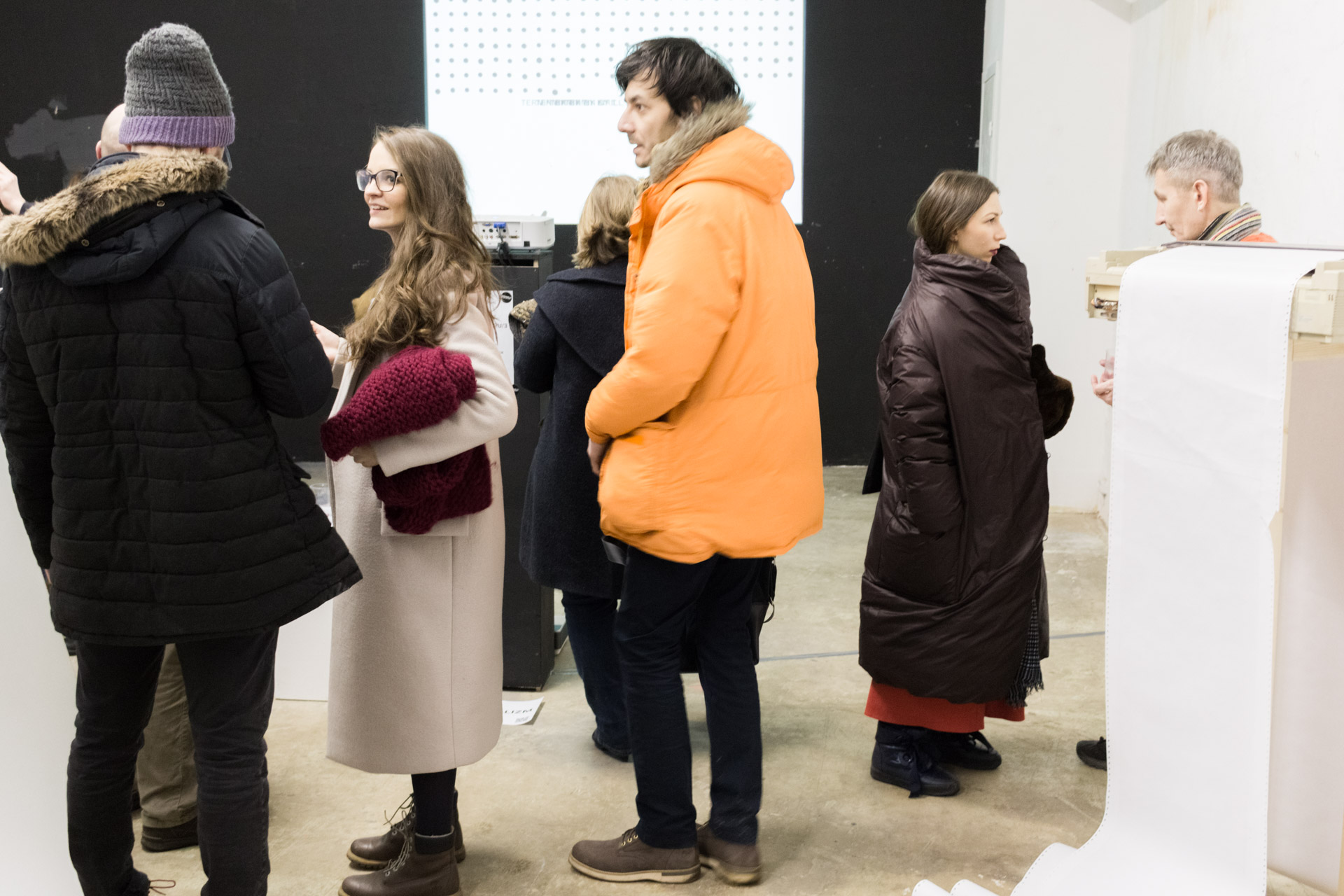
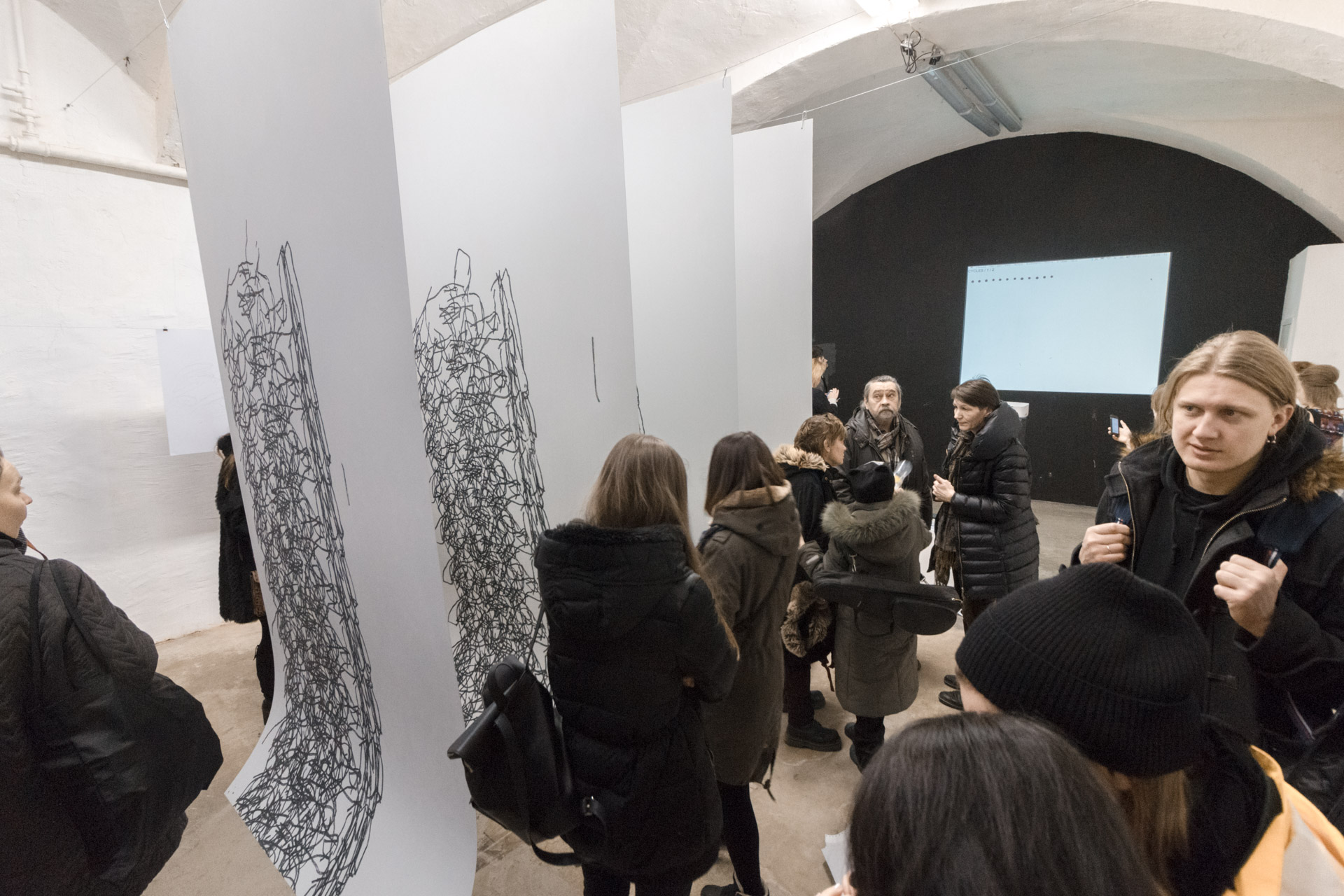
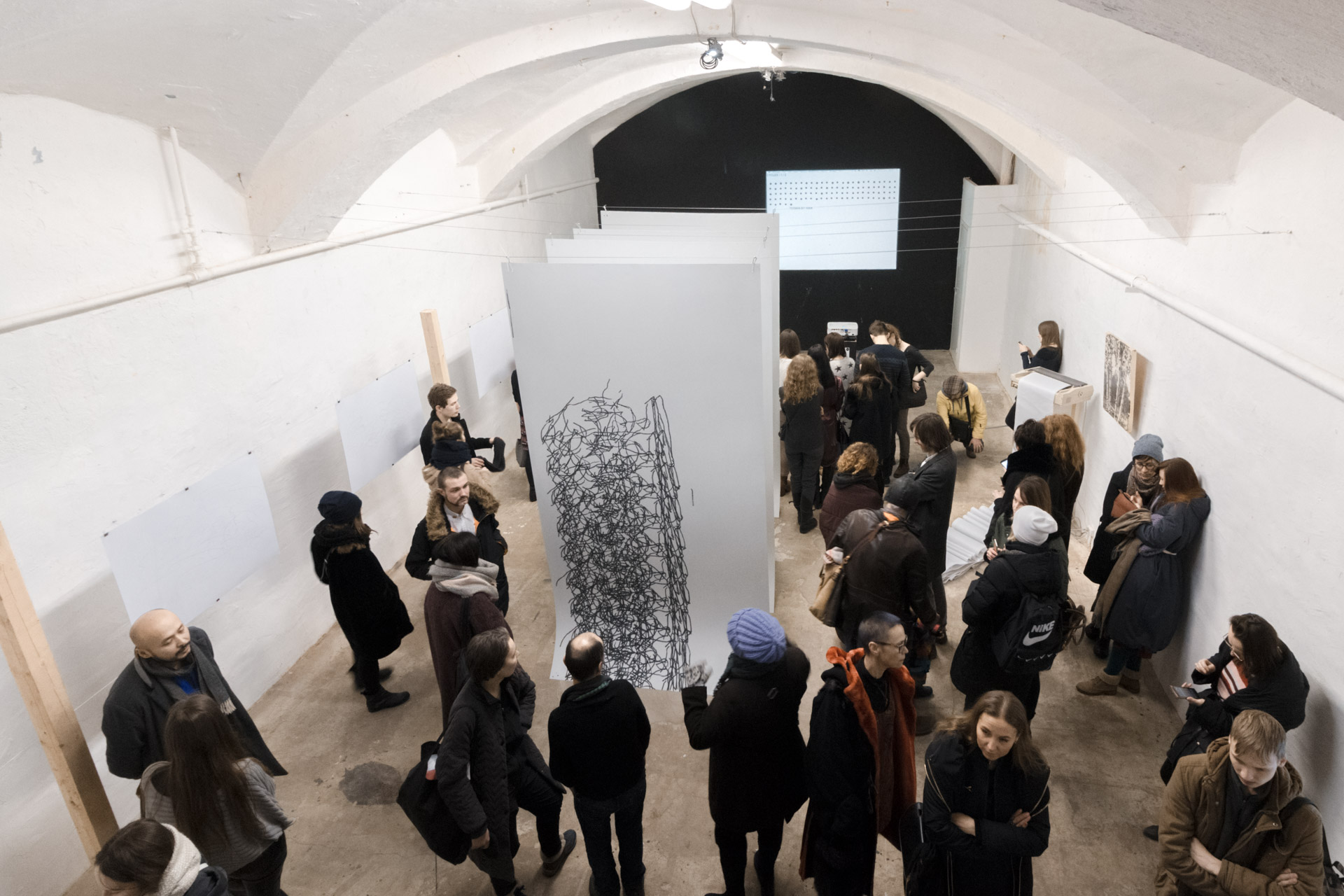
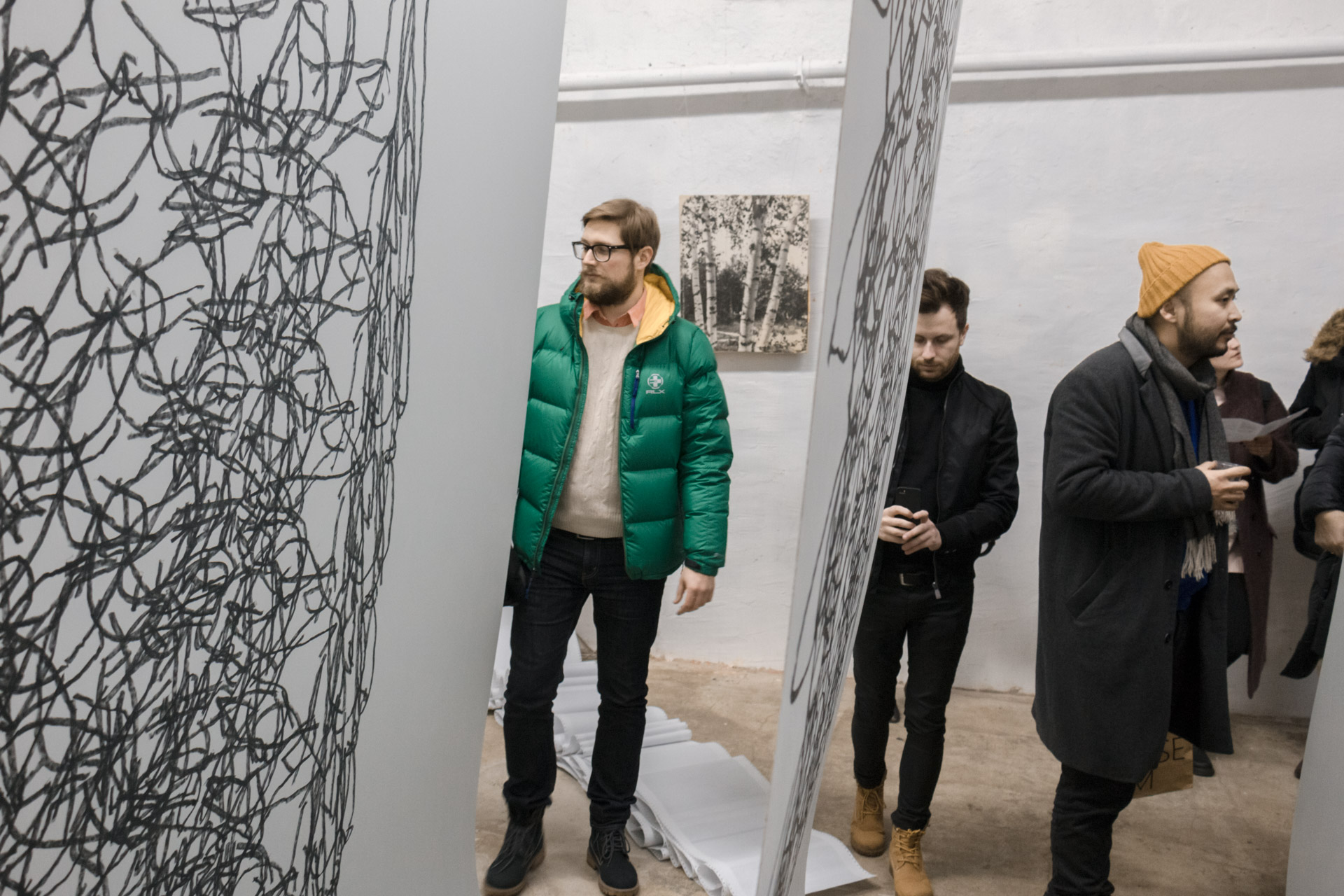
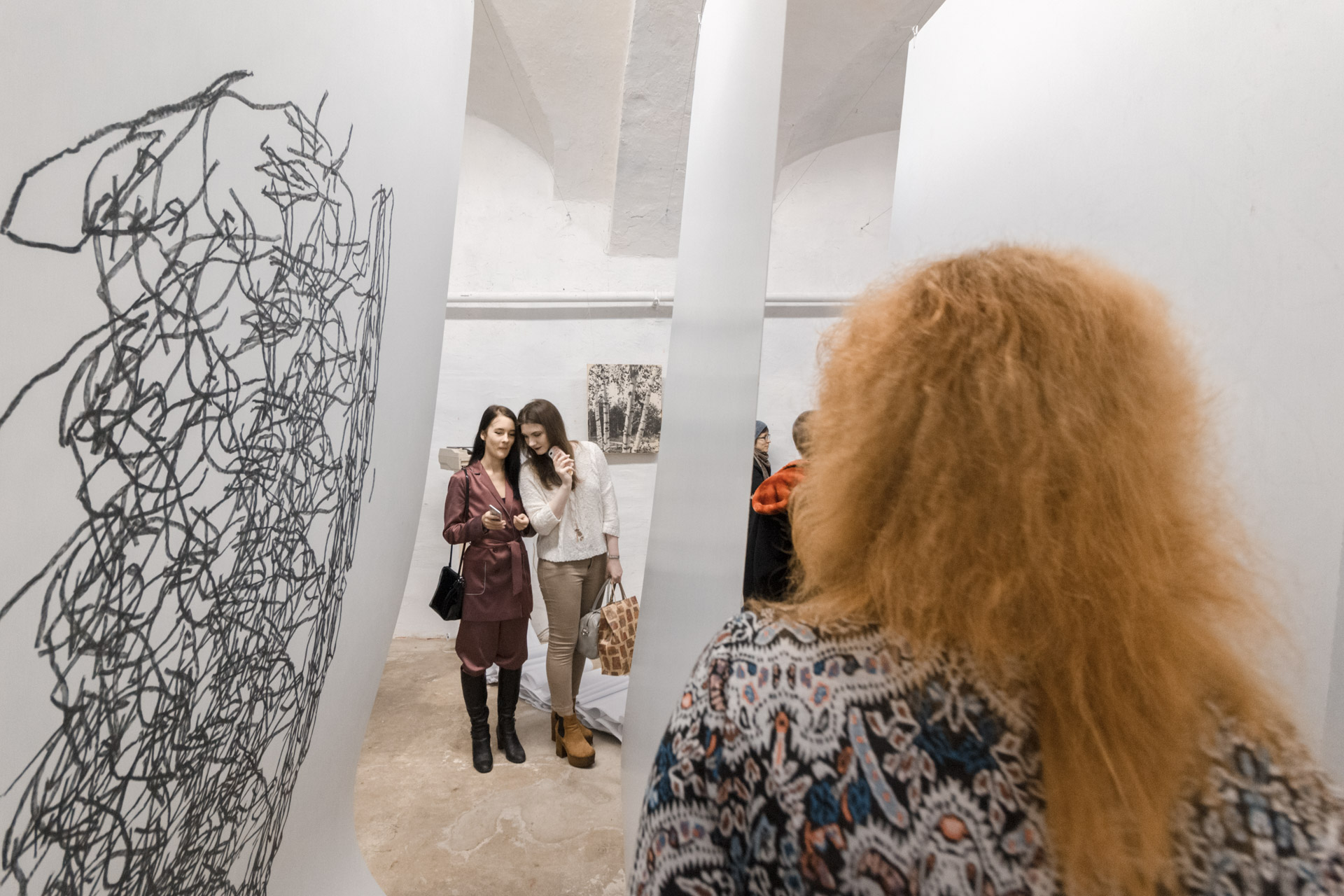
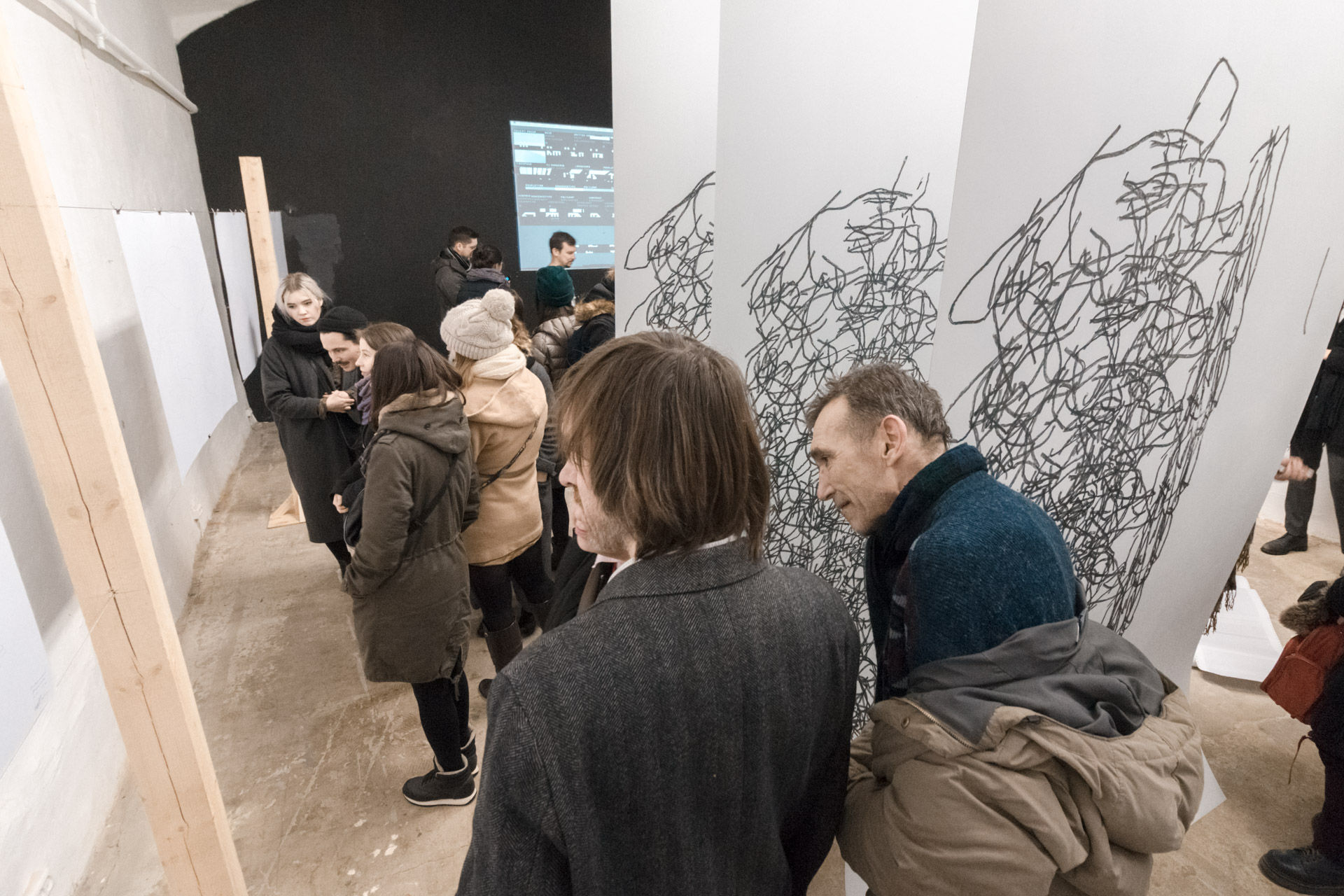
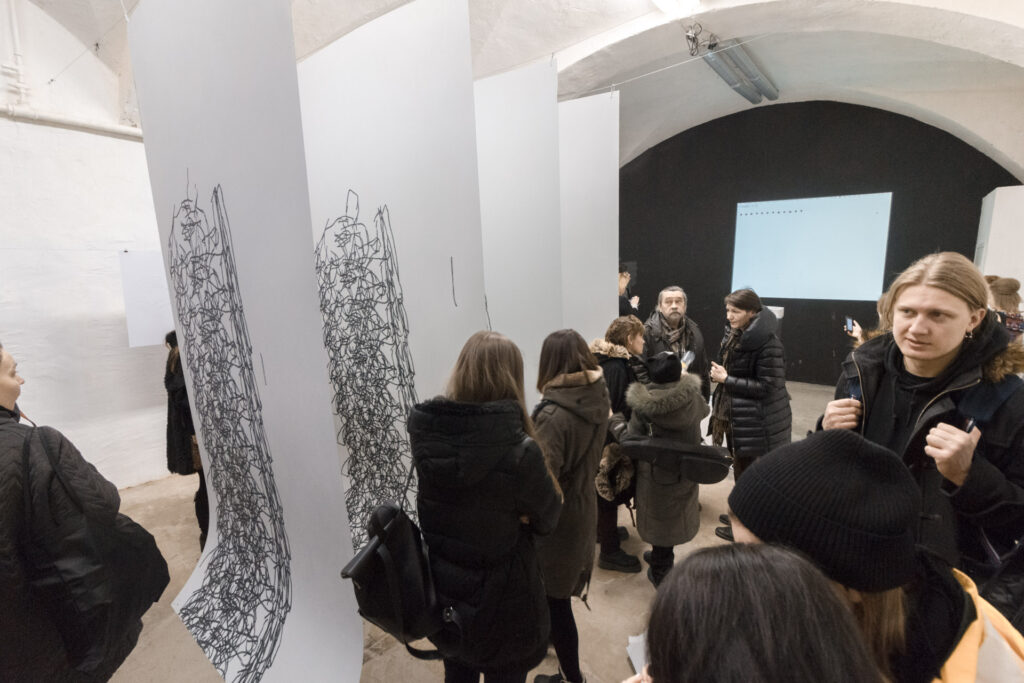
Opening of exhibition project “Mechanisms of Emergence”